Tire Buying Guide: What to Look For and How to Choose the Right Tires
When you buy a new set of tires, circular rubber components that connect your vehicle to the road, providing traction, stability, and shock absorption. Also known as rubber tires, they’re one of the only parts of your car that actually touch the ground—and yet most people pick them based on price alone. That’s a mistake. Tires affect how your car handles, how far it stops, how much fuel it uses, and even how quiet your ride feels. A bad tire choice can turn a smooth highway drive into a bumpy, dangerous mess.
Not all tires are built the same. tire types, categories like all-season, summer, winter, and performance tires, each designed for specific weather and driving conditions matter more than brand names. If you live where it snows, all-season tires won’t cut it—winter tires have softer rubber and deeper grooves that grip ice. If you drive fast on dry roads, performance tires offer better cornering but wear out faster. And if you’re hauling heavy loads or towing, you need tires with a higher load rating. Then there’s tire pressure, the amount of air inside the tire, measured in PSI, which impacts fuel economy, wear, and safety. Under-inflated tires wear out on the edges, over-inflated ones wear in the center, and both can blow out. Most cars list the right pressure on a sticker inside the driver’s door—don’t guess, check it.
tire lifespan, how long tires last before they need replacing, typically measured in miles or years, depending on driving habits and road conditions isn’t fixed. Some last 40,000 miles; others hit 80,000. It depends on how hard you brake, how fast you turn, and whether you hit potholes. Look for tread wear indicators—small rubber bars that appear when the tread is too low. If you can see them, it’s time. Also, even if the tread looks fine, tires older than six years can crack and fail. Check the DOT code on the sidewall: the last four digits tell you the week and year it was made.
You don’t need the most expensive tire on the shelf. But you also don’t want the cheapest one that barely passes safety tests. The best tire for you balances price, performance, and durability based on your driving. If you commute in rain, prioritize wet grip. If you drive long highway miles, look for low rolling resistance to save fuel. If you’ve got kids or carry heavy gear, safety and load capacity come first. The posts below cover real-world tire issues: how to spot wear before it’s dangerous, what tread patterns actually do, how to check pressure without a fancy gauge, and why replacing all four tires at once often makes more sense than just two. No fluff. Just what you need to pick the right tires—and keep your family safe.
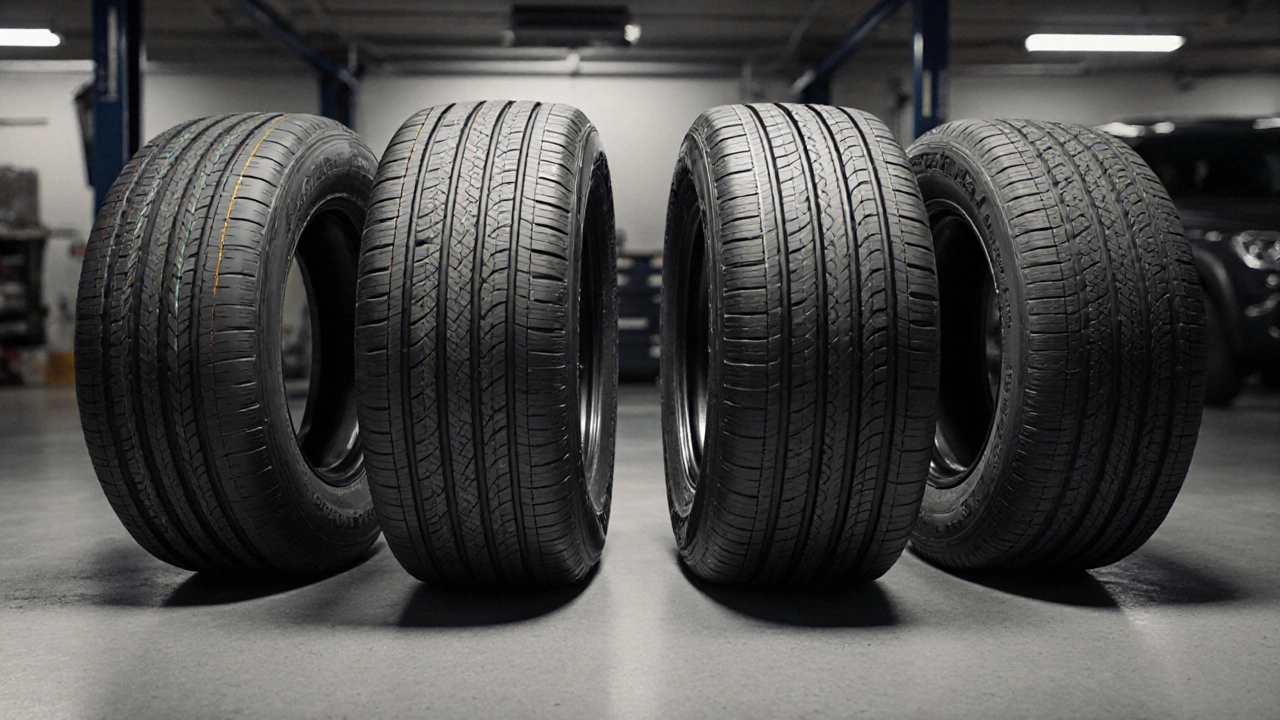
2025 Car Tires Price Guide: How Much Does a Set of 4 Cost?
Discover 2025 price ranges for a set of four car tires, the factors that affect cost, and practical tips for getting the best deal.