Tire Price Factors: What Really Affects Your Tire Cost
When you buy a new set of tires, the price tag can feel random—why does one tire cost $80 and another $200? The answer isn’t about branding alone. tire price factors, the specific characteristics that determine how much you pay for a tire. Also known as tire cost drivers, these include size, construction, material quality, and intended use—all of which directly impact performance, safety, and lifespan. A tire isn’t just rubber and steel; it’s engineered for a job, and that job shapes the price.
Take tire size, the physical dimensions of a tire, measured in width, aspect ratio, and rim diameter. Also known as tire dimensions, it plays a huge role in cost. Larger tires—like those for trucks or SUVs—use more material and stronger internal structures, making them more expensive than standard passenger car tires. Even small changes, like going from a 15-inch to a 17-inch rim, can add $50 to $100 per tire. Then there’s tire type, the category a tire belongs to based on its design and purpose. Also known as tire category, it includes all-season, summer, winter, and performance tires. A winter tire with deep treads and special rubber compounds costs more because it’s built to handle freezing roads. Performance tires? They use softer rubber for grip, which wears faster and costs more to make.
tire brand, the manufacturer behind the tire and its reputation for quality, durability, and warranty. Also known as tire manufacturer, it’s not just marketing. Brands like Michelin, Bridgestone, or Goodyear charge more because they invest in testing, materials, and long-term reliability. But that doesn’t mean cheaper brands are bad—some budget tires deliver 80% of the performance at half the price. The trick is knowing what you need. If you drive mostly on highways in dry weather, you don’t need a high-performance tire. If you live where it snows, you can’t afford to skimp on winter tires.
Don’t forget tire construction, how the layers inside the tire are layered and bonded together. Also known as tire ply design, it affects ride comfort, fuel efficiency, and durability. Radial tires, the standard today, are more expensive than older bias-ply tires because they offer better handling and longer life. But if you’re driving a classic car or a heavy-duty trailer, you might still need bias-ply—and that affects your budget too.
And then there’s the hidden cost: where you buy them. Some stores bundle installation, balancing, and valve stems. Others charge extra. A tire that looks cheaper online might end up costing more once you factor in labor. Always compare the total out-the-door price, not just the tire sticker.
What you’ll find in the posts below aren’t just random tire articles—they’re real-world breakdowns of what makes tires cost what they do. From how tire size affects your fuel economy to why some brands last twice as long as others, these guides cut through the noise. You’ll see exactly what to look for when shopping, what to skip, and how to match your driving habits to the right tire without paying for features you don’t need.
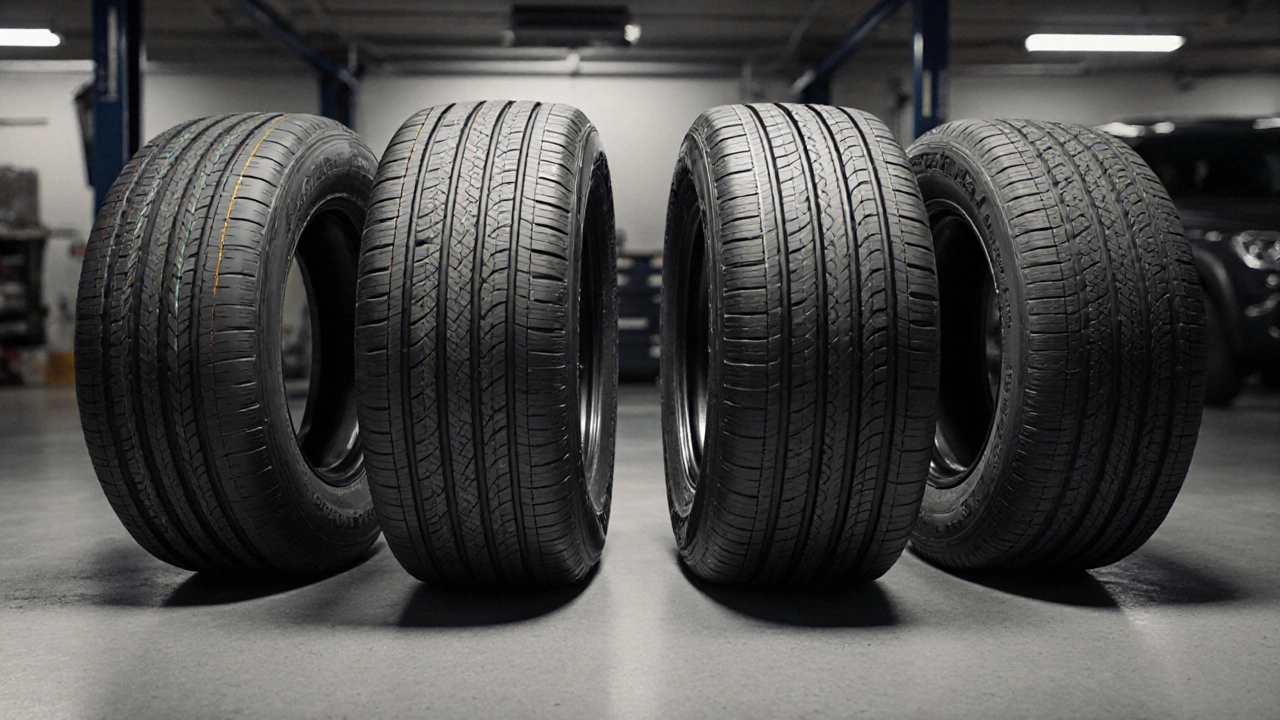
2025 Car Tires Price Guide: How Much Does a Set of 4 Cost?
Discover 2025 price ranges for a set of four car tires, the factors that affect cost, and practical tips for getting the best deal.