Used Oil: What It Is, Why It Matters, and What to Do Next
When you hear used oil, the spent engine lubricant drained from your car after thousands of miles. Also known as motor oil, it's not trash—it's a diagnostic tool that reveals how well your engine is running. Every drop carries clues: dark, gritty oil means contaminants are building up. Thin, milky oil? That’s coolant mixing in, and it’s serious. Clear, amber oil after a short drive? Your engine’s in good shape. Ignoring what your used oil says is like ignoring a check engine light—you’re just delaying the bill.
Oil viscosity, how thick or thin the oil flows at different temperatures determines how well it protects your engine under stress. Using the wrong viscosity—say, 5W-30 when your manual says 10W-40—means your engine isn’t getting the right film of protection. That’s how worn bearings, sludge buildup, and even engine seizures start. And engine oil, the lifeblood of internal combustion doesn’t just break down from heat—it picks up metal shavings, carbon, and water vapor over time. That’s why changing it isn’t optional. Skipping oil changes doesn’t save money. It just moves the cost from $50 to $5,000.
Used oil also ties directly to other parts you might be checking. A bad fuel pump? It can cause incomplete combustion, which leaves more carbon in the oil. A failing radiator? Overheating thins the oil and burns it off faster. Even worn spark plugs can lead to unburned fuel mixing into the oil, turning it into a sludgy mess. You can’t fix one without looking at the others.
And don’t forget what to do with it after it’s drained. Pouring used oil down the drain or tossing it in the trash isn’t just illegal—it’s toxic. One gallon can contaminate a million gallons of water. Auto parts stores and repair shops take it back for free. Recycling used oil saves energy, reduces pollution, and keeps your neighborhood clean.
Below, you’ll find real-world guides on what to look for in your oil, how often to change it, what happens when you don’t, and how other parts like your radiator, fuel pump, and spark plugs are connected to the oil’s condition. No fluff. Just what you need to know to keep your engine running longer and avoid expensive surprises.
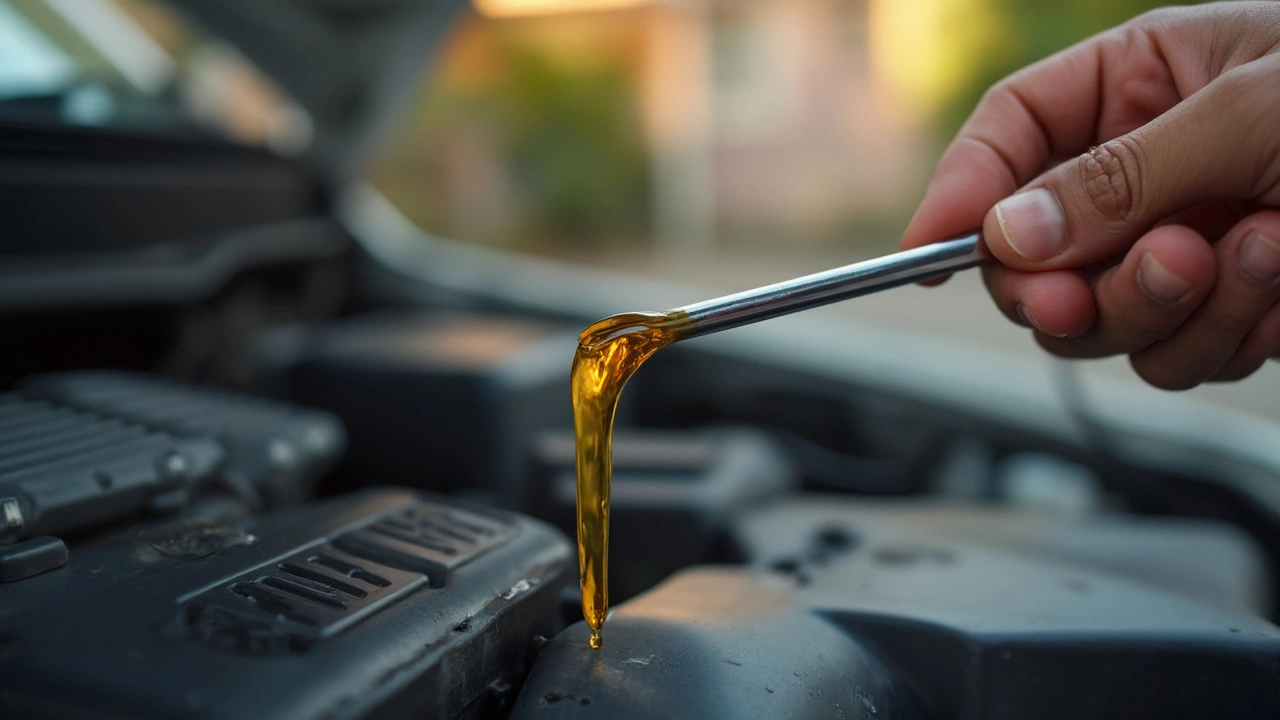
What Color Should Oil Be on a Dipstick? A Quick Guide for Drivers
Engine oil color on your dipstick tells you a lot about your car's health. This guide breaks down what those shades really mean, from golden new oil to dark, used fluid. You'll learn why oil changes color, when you should actually worry, and how to easily check your oil at home. Tips for spotting potential engine issues just by looking at the dipstick make this a must-read for anyone who drives. No jargon—just clear, practical advice.