Wheel Types: Find the Right Fit for Your Car
When you think about your car’s performance, you probably focus on the engine or brakes—but the wheels, the circular components that connect your car to the road, made from materials like steel, alloy, or carbon fiber. Also known as rims, they’re the only part of your car that actually touches the pavement. Get them wrong, and you’ll feel it in ride comfort, fuel efficiency, and even safety. The right wheel type can make your daily commute smoother or turn your weekend drive into a thrill.
Most cars come with steel wheels, basic, durable, and cheap to replace, often found on entry-level models and work trucks. They’re tough, handle potholes well, and don’t cost much to fix. But if you want better handling, lighter weight, and a sharper look, alloy wheels, made from aluminum or magnesium alloys, offer improved heat dissipation and reduced unsprung weight for better acceleration and braking. They’re the go-to for performance cars and tuned vehicles. Then there’s the rim size, the diameter and width of the wheel, which directly affects tire choice, ride quality, and how the car responds to steering inputs. Bigger rims look flashy but can make your ride harsher. Smaller ones absorb bumps better but might not fit over big brake calipers.
What you pick depends on how you drive. If you’re commuting on cracked city roads, steel wheels or modest alloy sizes are smarter. If you’re hitting winding backroads or track days, lightweight alloys with the right offset and width give you grip and control. And don’t forget—wheel weight affects fuel economy. Lighter wheels mean less rotational mass, so your engine doesn’t have to work as hard. That’s real savings at the pump.
You’ll find posts here that dig into what makes each wheel type tick—how alloy wheels handle heat better than steel, why some rim sizes cause rubbing on tight turns, and how to spot fake or poorly made wheels before you buy. Whether you’re replacing a bent rim after a pothole, upgrading for looks, or tuning for performance, the right wheel isn’t just about style—it’s about safety, efficiency, and how your car actually behaves on the road.
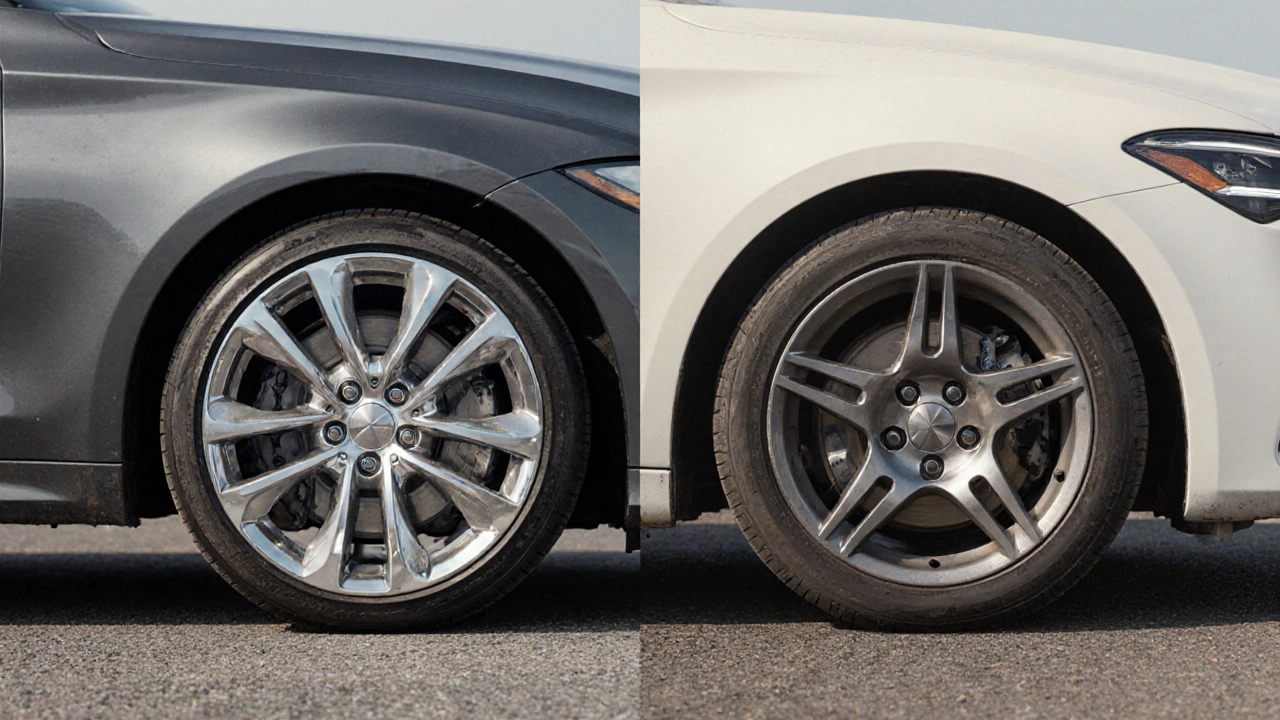
What Is the Difference Between Alloy Rims and Steel Rims?
Alloy rims are lighter and look better, but steel rims are tougher and cheaper. Learn the real differences in weight, performance, cost, and winter durability to choose the right wheels for your car.