Whole House Air Filter Replacement: What You Need to Know
When you think about keeping your home comfortable, you probably think about your heater or AC—but the real hero is the whole house air filter, a key component in your HVAC system that traps dust, pollen, and other airborne particles before they circulate through your home. Also known as HVAC air filter, it’s not just about clean air—it’s about protecting your system, cutting energy bills, and breathing easier every day.
Most people don’t realize how often this filter needs changing. A clogged filter forces your furnace or AC to work harder, which burns more energy and wears out parts faster. You don’t need a fancy smart filter to get results—just a regular replacement every 1 to 3 months, depending on pets, allergies, or how much dust your home collects. If you’ve got pets or live near a busy road, you might need to swap it out even more often. The air filter, a simple but critical part that fits into your return air duct or blower compartment comes in different types: fiberglass (cheap, basic), pleated (better capture), and electrostatic (reusable). Choosing the right one isn’t about price—it’s about matching it to your system’s specs and your household’s needs.
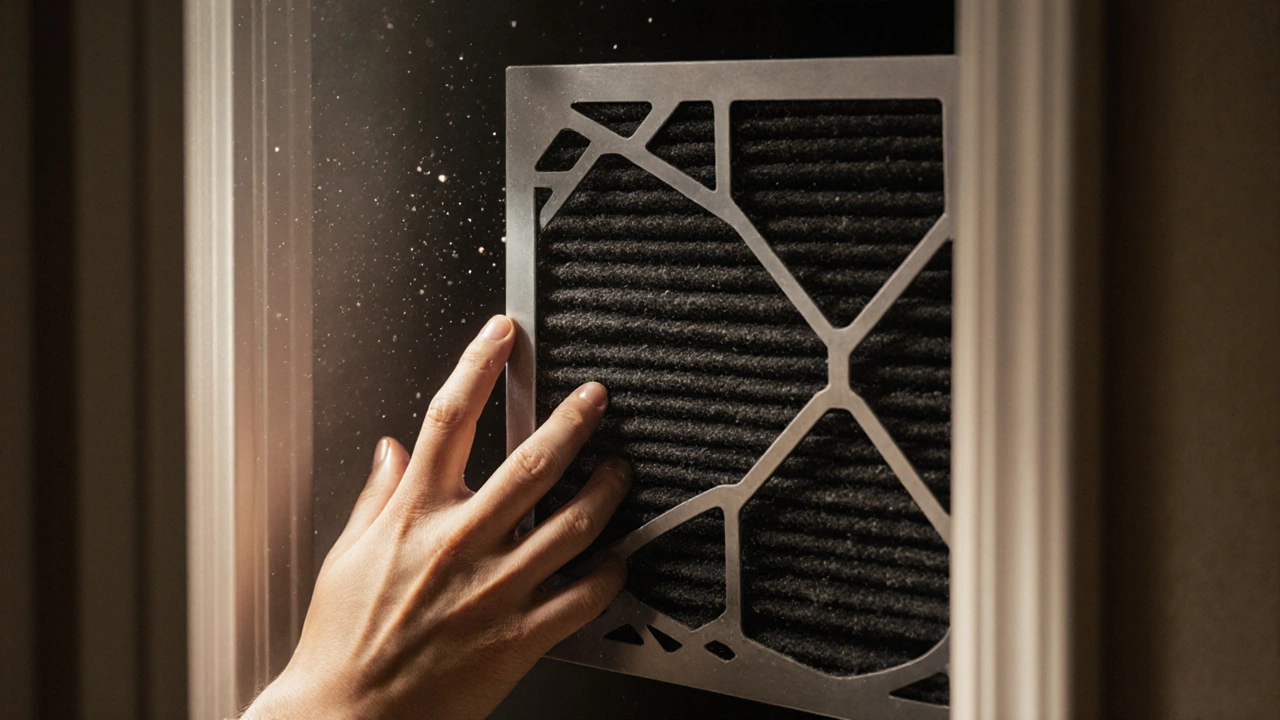
Your HVAC filter, the part that protects your blower motor and ductwork from debris isn’t just for health. A dirty one can cause your system to overheat, freeze up, or even break down in the middle of winter or summer. That’s not just expensive—it’s dangerous. Replacing it is one of the easiest DIY tasks in home maintenance. No tools needed. Just turn off the power, slide out the old one, check the arrow on the frame (it must point toward the blower), and slide in the new one. If you’re unsure what size you need, look at the old filter—it’s printed right on the frame.
Some brands push expensive filters claiming to trap 99% of particles. But if your system can’t handle the extra resistance, it’ll strain more than help. The best filter isn’t the one with the highest MERV rating—it’s the one your system can handle without losing airflow. Most homes do fine with a MERV 8 to 11. Only go higher if you have serious allergies or a medical need, and even then, check with your HVAC pro first.
And don’t forget—this isn’t just about your furnace. The same filter also protects your air conditioner. Skip it, and you’re asking for costly repairs down the line. A clean filter is the cheapest insurance policy your home has.
Below, you’ll find real-world guides on air filters, from how to pick the right one to whether expensive brands actually deliver better performance. No fluff. Just what works.
How Often to Replace Your Whole‑House Air Filter
Learn how often to replace your whole‑house air filter based on filter type, household conditions, and indoor air quality needs.