Worn Shocks: Signs, Risks, and What to Do Next
When your worn shocks, damaged shock absorbers that fail to control spring movement and stabilize your vehicle. Also known as failing suspension dampers, they don’t just make your ride bumpy—they make it unsafe. Most drivers don’t realize how much these small parts do until everything starts feeling loose, noisy, or unpredictable.
Worn shocks directly affect your suspension system, the network of springs, struts, and dampers that absorb road impacts and keep tires in contact with the pavement. If the shocks are gone, your tires bounce instead of gripping. That means longer braking distances, especially in rain or on gravel. It also means your tires wear unevenly—sometimes so badly you’ll need new ones before the shocks even get replaced. And if you hear clunking or rattling when you hit a bump, that’s not just noise—it’s metal hitting metal because the shock can’t hold things in place anymore.
Think of your shocks like the brakes of your ride. You don’t wait until your brakes fail to fix them. Same goes here. A bad shock doesn’t usually leave you stranded, but it slowly turns every drive into a gamble. Your car leans too much in turns. The front dips hard when you brake. The back bounces after going over a speed bump. These aren’t just annoyances—they’re warning signs that your control is slipping. And if you drive on rough roads or carry heavy loads often, the damage happens faster.
People often confuse worn shocks with bad struts or loose ball joints. But the sounds and symptoms are different. A bad strut might groan when turning. A worn ball joint clicks when going over bumps. Worn shocks? They make your whole car feel like it’s floating, then slamming down—like you’re driving on a trampoline. You’ll notice it more on highways, where the car feels less planted and more skittish.
You don’t need a mechanic to spot them. Try the bounce test: push down hard on one corner of your car and let go. If it bounces more than once or twice, your shocks are tired. Look for oil leaks around the shock body—any wetness means internal seals are broken. And if your tires show cupping—uneven patches of wear that look like scallops—you’ve got a classic sign of failing dampers.
Replacing worn shocks isn’t just about comfort. It’s about safety. Studies show vehicles with bad shocks take up to 20% longer to stop from 60 mph. That’s the length of a full car. And in an emergency, that extra distance could mean the difference between avoiding a crash and being in one. Plus, worn shocks put extra stress on your tires, brakes, and steering parts. You’ll end up fixing more than just the shocks if you wait too long.
What you’ll find below are real, practical guides from drivers who’ve been there. From how to tell if your shocks are done for good, to what noises to listen for, to whether you can drive safely with bad ones. No fluff. No theory. Just what works on the road.
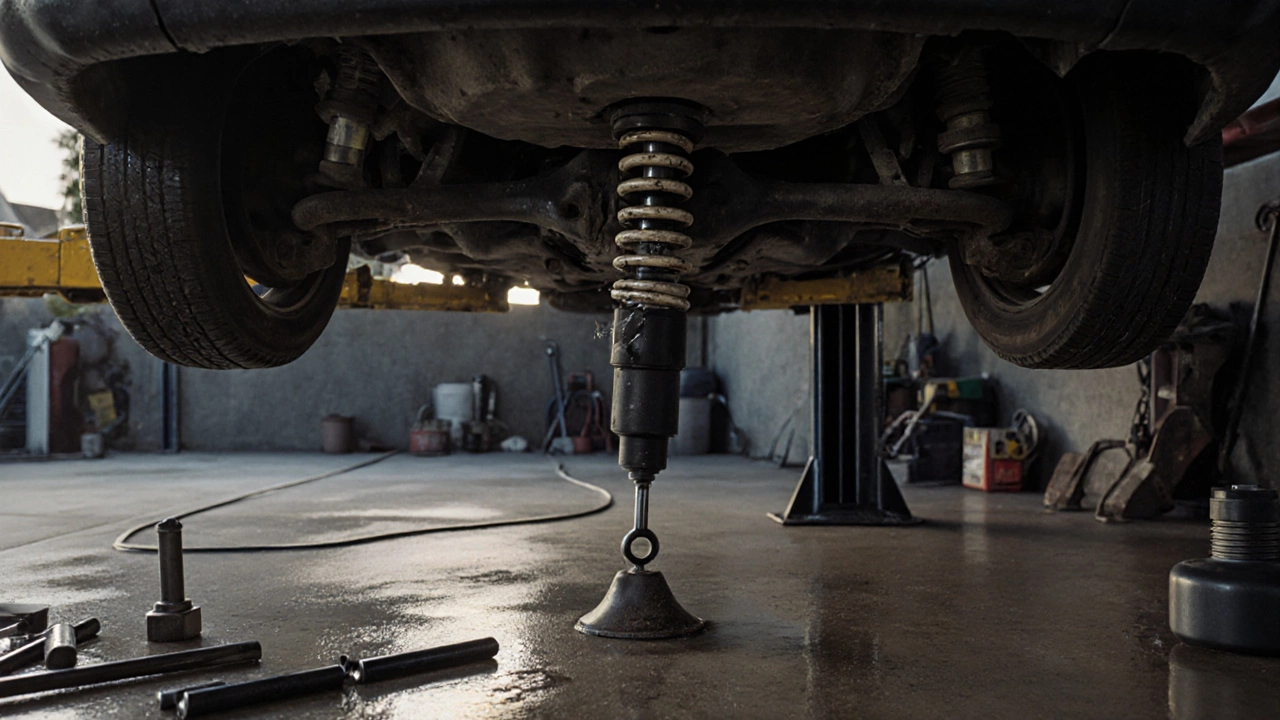
How to Fix a Bad Suspension: Diagnose and Repair Common Issues
Learn how to diagnose and fix a bad suspension with step-by-step guidance on shocks, struts, bushings, and ball joints. Save money and stay safe by addressing wear before it turns dangerous.