 Feb, 17 2026
Oil Change Interval Calculator
Input Your Current Data
Why This Matters
Manufacturers recommend 10,000 km or 6 months—but these intervals are for ideal conditions. In real-world driving, especially with short trips, traffic, or harsh weather, oil degrades faster. The article explains that the real rule is: change your oil every 8,000 km or every 6 months, whichever comes first.
Skipping oil changes can lead to:
- Engine overheating
- Knocking or ticking noises
- Dark, gritty oil on dipstick
- Reduced fuel economy
- Check engine light
- Blue exhaust smoke
Ignoring these signs can lead to engine failure costing $4,000-$8,000.
Your Oil Change Estimate
Skipping your oil change might seem harmless at first-after all, your car still starts, the dashboard doesn’t light up, and you haven’t noticed any strange noises. But engine oil doesn’t just sit there. It breaks down. It gets dirty. And when it does, your engine pays the price. You won’t always see it coming, but the signs are there if you know what to look for.
Engine Runs Hotter Than Normal
Oil isn’t just about lubrication-it’s also a coolant. In modern engines, oil absorbs heat from moving parts like pistons, bearings, and camshafts. When oil gets old, it loses its ability to transfer heat effectively. You might notice your temperature gauge creeping higher than usual, even during normal driving. Or maybe your AC isn’t cooling as well as it used to because the engine is already working overtime. In Hamilton winters, where idling in traffic is common, this heat buildup can happen faster than you think. Over time, overheating can warp cylinder heads or crack engine blocks. And those repairs? They cost more than ten oil changes.
Strange Noises from the Engine
Think of your engine like a clock. Every gear needs to turn smoothly. Without clean oil, metal parts start grinding against each other. You’ll hear it. A knocking sound from the bottom of the engine? That’s rod bearing wear. A ticking noise from the top? That’s valve train components starving for lubrication. These aren’t normal sounds. They’re warning signs. I’ve seen cars come in with 80,000 km on the odometer but 18 months since their last oil change. The owner thought the car was fine-until the knocking got louder and the engine seized on the highway. No magic fix. Just a new engine or a new car.
Dark, Grimey Oil on the Dipstick
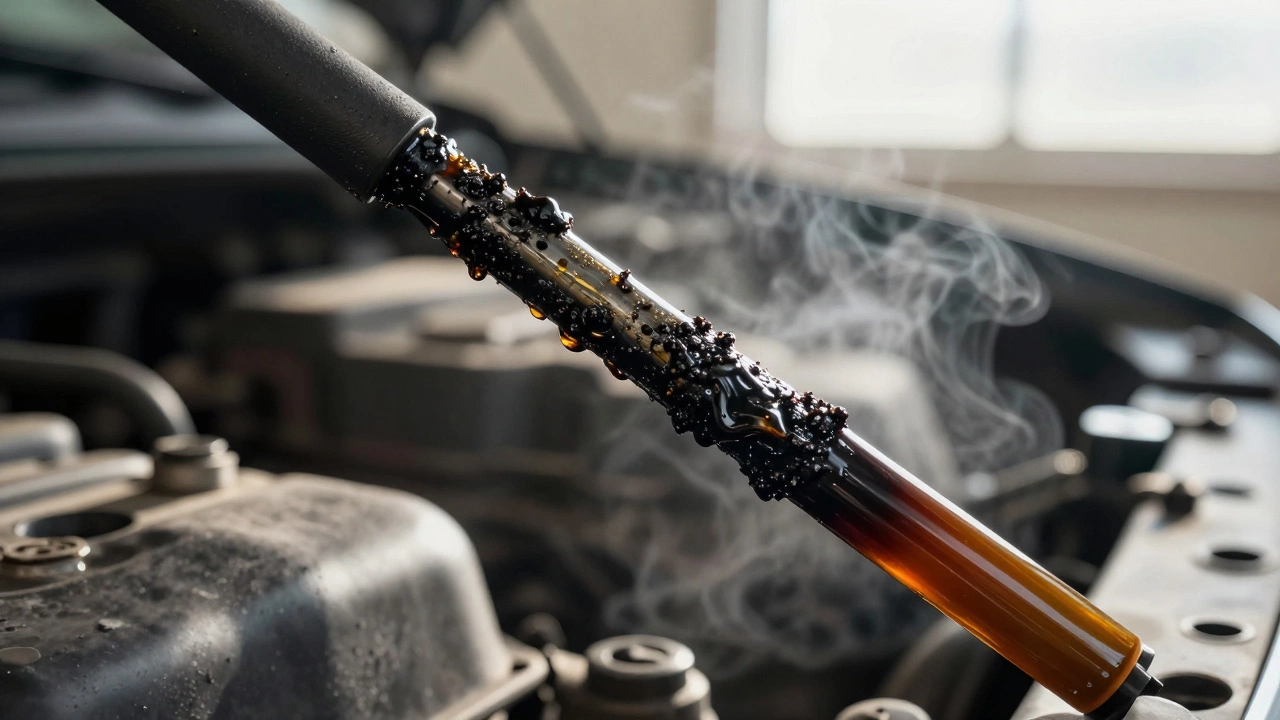
Check your dipstick. Fresh oil is amber and translucent. Used oil turns dark, yes-but that’s not the real problem. If it’s thick, gritty, or looks like motor oil mixed with tar, you’re in trouble. The additives that keep oil clean and slippery have broken down. Contaminants like soot, metal shavings, and moisture are now suspended in the oil, acting like sandpaper inside your engine. A quick wipe with a rag won’t tell the full story. If you can’t see the dipstick markings clearly through the oil, it’s time to change it. No exceptions.
Decreased Fuel Efficiency
Ever notice your gas mileage dropping without any change in driving habits? That’s not your fault. Dirty oil increases internal engine friction. The pistons don’t move as smoothly. The crankshaft has to work harder. The transmission shifts less efficiently. All of this adds up. A study by the American Automobile Association found that vehicles with overdue oil changes lost an average of 2-4% in fuel economy after just 3,000 km past the recommended interval. In a car that gets 10 L/100 km, that’s an extra 20-40 liters of fuel per year. That’s over $60 in Canada at today’s prices-just for skipping six months of maintenance.
Check Engine Light Comes On
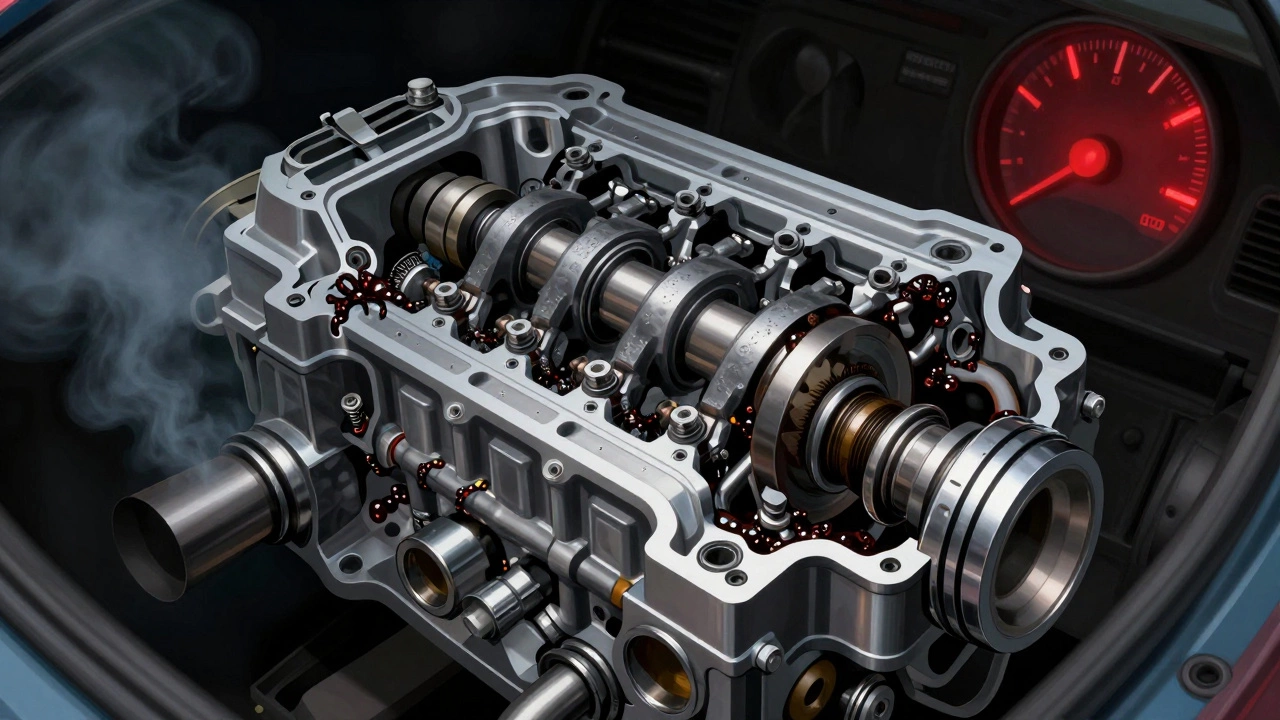
The check engine light isn’t always a big deal. Sometimes it’s a loose gas cap. But if it’s on and you haven’t changed your oil in over a year, the odds are high that oil pressure sensors are detecting low flow or poor viscosity. Modern cars have oil pressure sensors linked to the engine control unit. When oil thickens or becomes contaminated, it can’t flow properly through narrow passages. The system flags it as a potential failure. Ignoring this light while ignoring your oil change is like ignoring a smoke alarm because you think it’s just dust.
Exhaust Smoke You Didn’t Notice Before
Blue smoke from the tailpipe? That’s oil burning in the combustion chamber. It happens when old, degraded oil leaks past worn piston rings or valve seals-both of which are more likely to fail when lubrication is poor. You might not see it every time, but if you notice it more often after stopping at a light or during cold starts, your engine is consuming oil. This isn’t normal. It’s a symptom of internal wear caused by long-term neglect. And once oil starts burning, the damage accelerates. You’ll need a valve job, ring replacement, or worse.
Sluggish Acceleration and Poor Throttle Response
When oil turns into sludge, it clogs oil passages that feed critical components like variable valve timing systems. These systems rely on precise oil pressure to adjust valve timing for power and efficiency. When they can’t get enough clean oil, your engine loses responsiveness. You press the gas pedal, and the car hesitates. It feels like driving through syrup. Drivers often blame fuel injectors or spark plugs. But if your oil hasn’t been changed in over 15,000 km, sludge is the real culprit. Cleaning the intake or replacing sensors won’t fix it. You need fresh oil-and soon.
Oil Smell Inside the Cabin
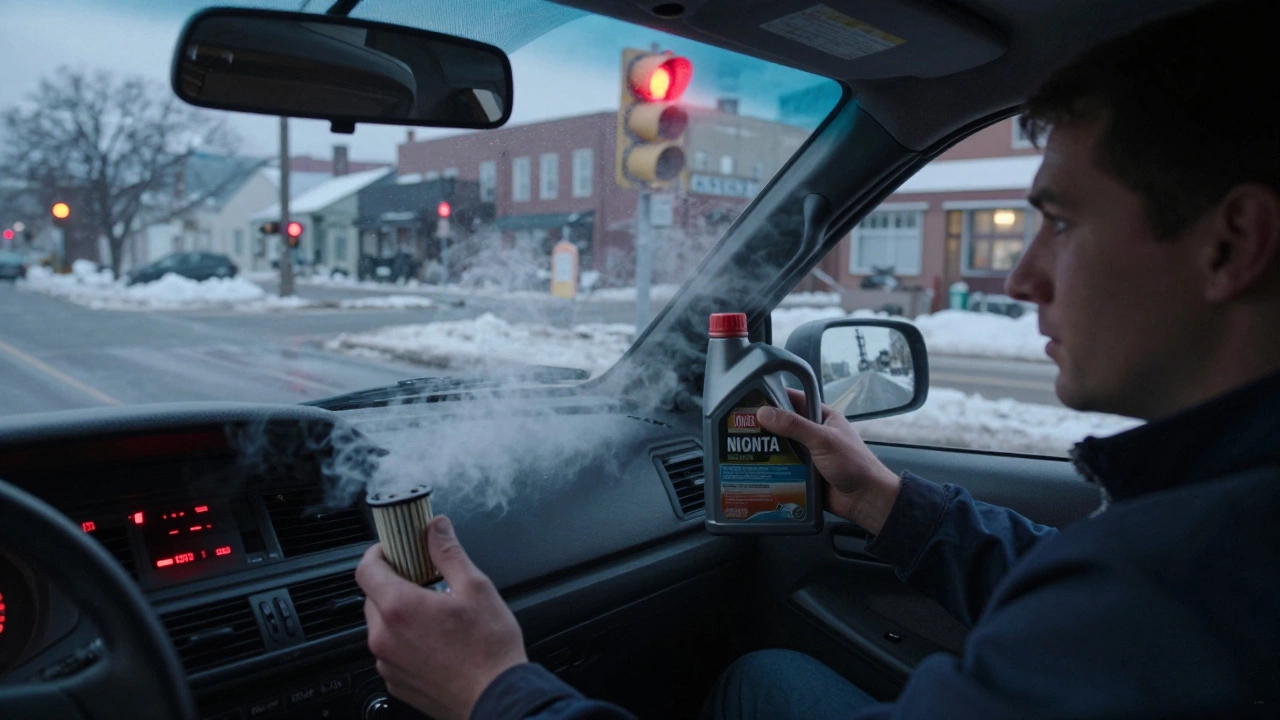
That faint, burning smell when you roll down the window? It’s not exhaust. It’s hot oil leaking onto the exhaust manifold. Old oil breaks down into thinner, more volatile compounds. It leaks more easily through degraded gaskets and seals. If you’re smelling oil inside the car or near the engine bay after driving, it’s not just a nuisance-it’s a sign that seals are failing. And once they start leaking, they’ll leak more. Eventually, you’ll lose oil fast enough to cause engine damage before you even notice.
Oil Change Intervals Aren’t Set in Stone
Manufacturers say 10,000 km or 6 months-but that’s under ideal conditions. If you drive short trips, sit in stop-and-go traffic, haul heavy loads, or live where winters are harsh (like Hamilton), your oil degrades faster. Synthetic oil lasts longer, but it still breaks down. The real rule? Change your oil every 8,000 km or every 6 months, whichever comes first. Don’t wait for the light. Don’t wait for the noise. Don’t wait for the smoke. By then, it’s too late.
What Happens If You Keep Driving?
Eventually, sludge builds up so badly that oil can’t circulate at all. The engine runs dry. Bearings melt. Pistons seize. Valves stick. The engine dies-and it doesn’t come back. You’ll be left with a $4,000-$8,000 engine replacement bill. Or worse, a totaled car. A routine oil change costs $50-$80. The average cost of an engine rebuild? Over $5,000. That’s not a gamble. That’s a choice.
| Symptom | What It Means | Typical Mileage When It Appears |
|---|---|---|
| Engine overheating | Oil can’t transfer heat properly | 12,000-15,000 km past interval |
| Knocking or ticking noises | Metal parts grinding without lubrication | 10,000-13,000 km past interval |
| Dark, gritty oil on dipstick | Additives broken down; contaminants present | 8,000-10,000 km past interval |
| Reduced fuel economy | Increased friction from dirty oil | 6,000-8,000 km past interval |
| Check engine light | Low oil pressure or flow detected | 9,000-12,000 km past interval |
| Blue exhaust smoke | Oil burning in combustion chamber | 15,000+ km past interval |
| Sluggish acceleration | Sludge clogging variable timing systems | 12,000+ km past interval |
| Oil smell in cabin | Leaking seals due to degraded oil | 10,000+ km past interval |
Can I just top off my oil instead of changing it?
No. Topping off oil doesn’t remove contaminants, sludge, or broken-down additives. It just dilutes the bad oil with more bad oil. You’re not extending the life of the oil-you’re masking the problem. Eventually, the oil will still degrade, and your engine will still suffer. A full change removes all the old oil and replaces it with fresh, clean fluid.
Does synthetic oil last longer than conventional oil?
Yes, but not indefinitely. Synthetic oil resists breakdown better and flows more smoothly in cold weather. It can last up to 15,000 km under ideal conditions. But if you drive in stop-and-go traffic, tow trailers, or live in extreme cold, even synthetic oil degrades faster. The 6-month or 8,000 km rule still applies for most drivers.
What happens if I go too long without an oil change?
Sludge builds up, oil pressure drops, and critical engine parts begin to wear or seize. Bearings, pistons, and valves can fail. In worst-case scenarios, the engine locks up completely. That’s not a repair-it’s a replacement. And it costs 50 to 100 times more than an oil change.
Should I change my oil filter every time?
Always. The filter traps dirt and metal particles. If you change the oil but leave the old filter, you’re letting all that gunk back into your fresh oil. A new filter costs $5-$15. Skipping it risks contaminating your entire oil system.
Is it worth getting an oil change if my car has low mileage?
Yes. Oil breaks down over time-even if you don’t drive much. Moisture from condensation, heat cycles, and chemical reactions degrade oil. If you haven’t changed it in over 6 months, it’s time-regardless of mileage.
Don’t Wait for the Engine to Fail
Oil changes aren’t about fear. They’re about control. You don’t need to be a mechanic to prevent engine failure. You just need to be consistent. Set a reminder on your phone. Write it on your calendar. Put a sticky note on your dashboard. The next time you’re tempted to skip it because "it still runs," remember: engines don’t fail suddenly. They fail slowly. And by the time you notice, it’s already too late.