 Aug, 18 2026
Oil Change Cost Calculator
Harsh conditions shorten oil life, so you'll need more frequent changes.
Imagine your car’s engine as a complex machine where friction is the enemy. Engine oil is the lubricant that reduces friction, cools components, and cleans debris inside the engine block. Without it, metal rubs against metal, generating heat that can warp parts or seize the entire system. But what happens when you ignore the warning light on your dashboard for months or even years? The consequences range from mild performance drops to catastrophic engine failure that costs thousands of dollars in repairs.
The Immediate Effects of Old Oil
When you skip an oil change, the oil doesn't just get dirty; it chemically breaks down. Over time, Volatile Organic Compounds (VOCs) evaporate, and the oil loses its viscosity. This means it becomes thinner than it should be, failing to create a protective film between moving parts like pistons and crankshafts. Simultaneously, contaminants like soot, metal shavings, and fuel residues accumulate. These particles act like sandpaper, grinding away at precision-machined surfaces. You might notice this first as increased engine noise-a ticking or knocking sound that wasn't there before. That's often the sound of metal-on-metal contact because the oil film has thinned out too much to protect the components.
Sludge Formation: The Silent Killer
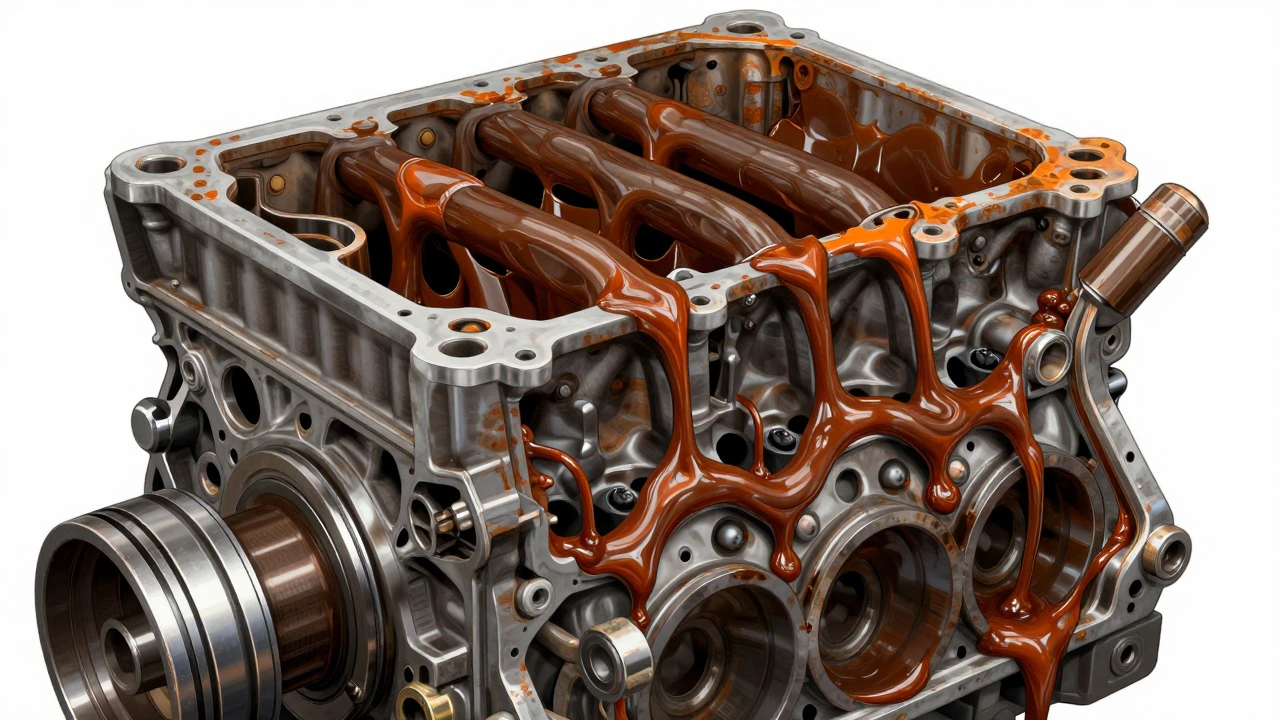
If you push the limits further, you risk developing Engine Sludge. Sludge is a thick, tar-like substance formed when oil oxidizes and mixes with combustion byproducts. It clogs the tiny passages in the engine block that are designed to deliver oil to critical areas. Think of it like cholesterol clogging arteries. When these passages get blocked, certain parts of the engine starve for lubrication. The camshaft and lifters are particularly vulnerable. Once they stop moving freely, valve timing goes off, leading to poor combustion, reduced power, and eventually, engine seizure. Removing sludge requires a complete engine teardown, which is rarely worth the cost compared to buying a new engine.
Impact on Fuel Economy and Performance
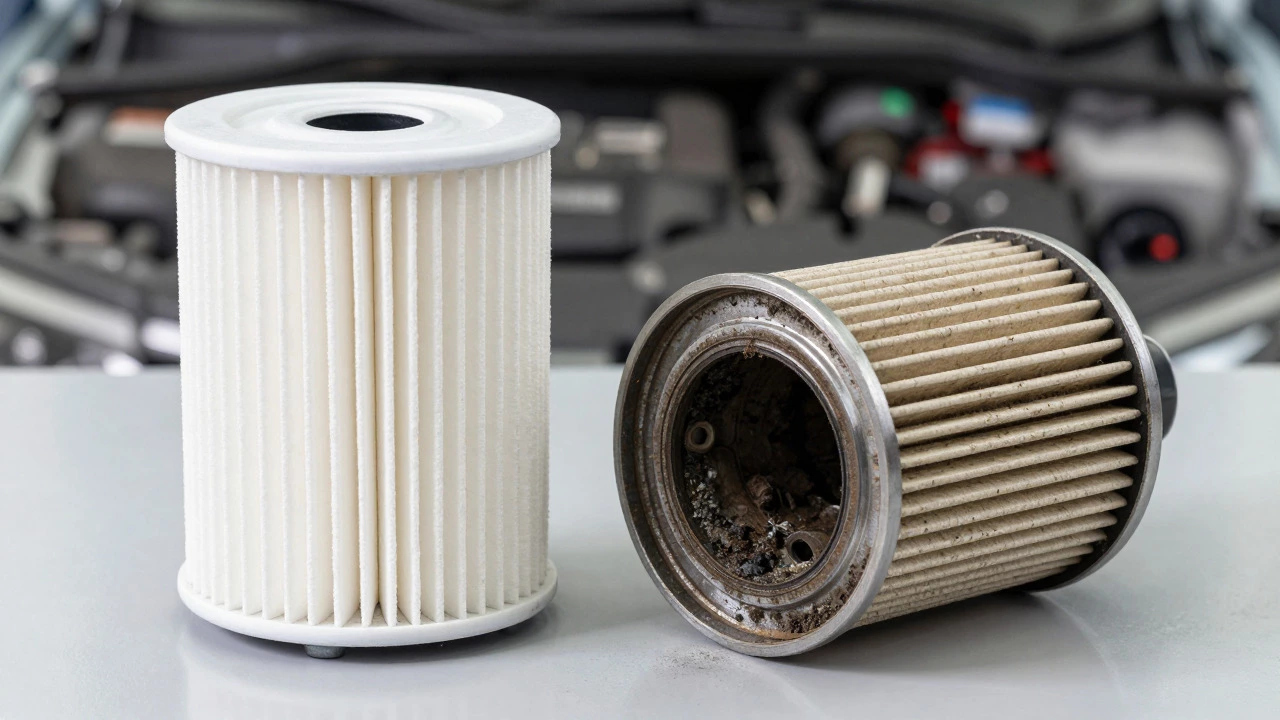
You don't have to wait for total failure to see the effects. Neglected oil changes directly hurt your wallet at the gas station. Thick, degraded oil creates more drag on the engine's moving parts. Your engine has to work harder to turn over, burning more fuel to produce the same amount of power. Studies show that cars with overdue oil changes can see a drop in fuel efficiency by up to 5%. Additionally, the Oil Filter gets clogged with trapped debris. Once the filter reaches capacity, the bypass valve opens, allowing unfiltered oil to circulate back into the engine. This accelerates wear on all components, creating a vicious cycle of degradation.
| Attribute | Fresh Synthetic Oil | Degraded Oil (6+ Months) |
|---|---|---|
| Viscosity Stability | Maintains consistent thickness | Becomes thin or gummy |
| Lubrication Ability | Forms strong protective film | Poor film strength, high friction |
| Cleaning Capacity | Suspends and removes debris | Allows sludge buildup |
| Corrosion Protection | High additive package effectiveness | Additives depleted, rust risk increases |
Why Modern Engines Are More Sensitive
Older cars were built with looser tolerances, meaning parts had more space between them. Modern engines, however, are engineered with microscopic clearances to maximize efficiency and reduce emissions. This precision makes them far less forgiving of neglect. A single grain of metal shavings suspended in old oil can score a bearing surface that was originally smooth as glass. Furthermore, modern engines run hotter under load to meet strict emission standards. Higher temperatures accelerate oil breakdown, meaning the lifespan of the oil is shorter than in older models. If you drive short distances frequently, moisture builds up in the oil because the engine never gets hot enough to burn it off. This water contamination leads to acid formation, which eats away at seals and bearings from the inside out.
Signs Your Oil Needs Changing Now
Your car gives you plenty of warnings before things go wrong. Pay attention to these specific indicators:
- Check Engine Light: While often associated with sensors, a persistent light can indicate low oil pressure or quality issues detected by the computer.
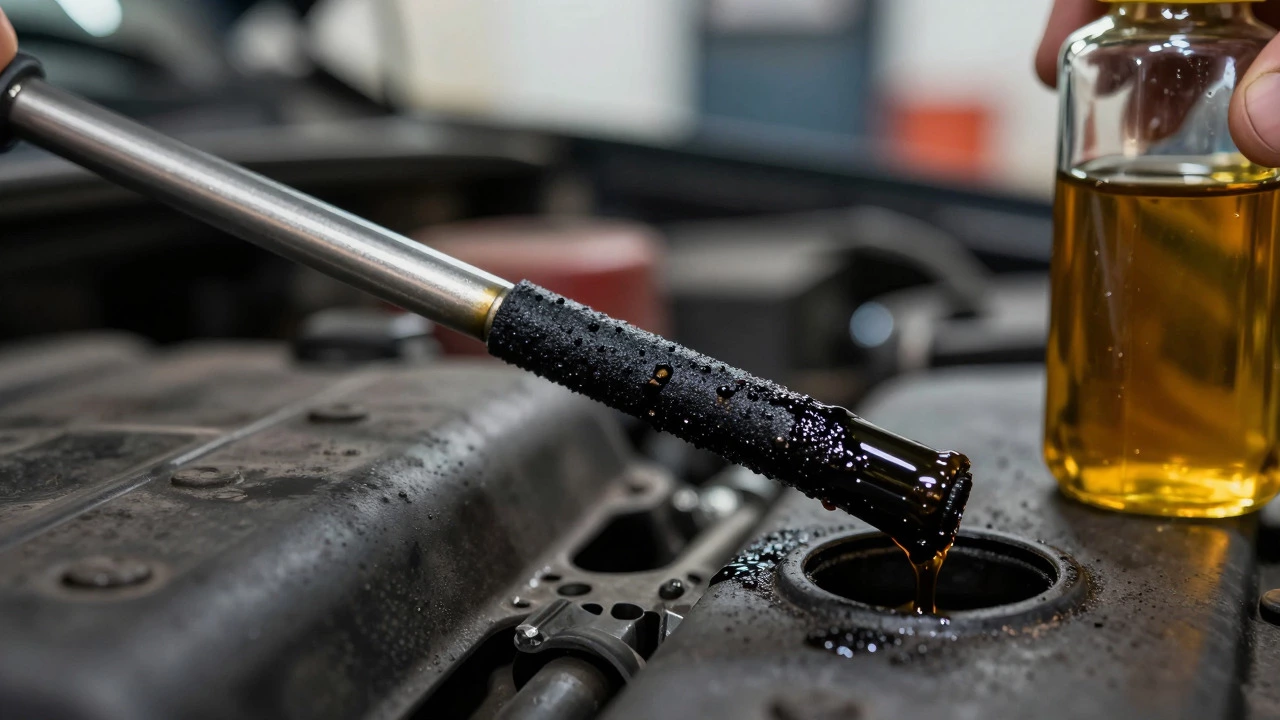
- Dark, Smelly Oil: Pull the dipstick. Fresh oil is amber and clear. Old oil is black, opaque, and smells burnt.
- Grainy Texture: If the oil feels gritty on your finger, metal particles are circulating in the system.
- Unusual Noises: Ticking, knocking, or whining sounds from the engine bay suggest insufficient lubrication.
- Exhaust Smoke: Blue smoke indicates oil is being burned, possibly due to worn seals exacerbated by poor lubrication.
How Often Should You Actually Change It?
The "every 3,000 miles" rule is outdated for most modern vehicles. Most manufacturers now recommend intervals between 5,000 and 10,000 miles, depending on whether you use conventional or synthetic oil. Synthetic Oil is engineered to resist breakdown better than conventional oil, lasting longer under extreme conditions. However, mileage isn't the only factor. Time matters too. Even if you only drive 2,000 miles a year, the oil degrades due to oxidation and moisture accumulation. As a general rule, change your oil every six months or 5,000 miles, whichever comes first. If you tow heavy loads, drive in dusty environments, or do lots of stop-and-go city driving, stick to the shorter end of that spectrum.
Cost of Neglect vs. Cost of Maintenance
An oil change typically costs between $40 and $80 at an independent shop. It takes 20 minutes. An engine rebuild, on the other hand, can cost anywhere from $2,000 to $5,000, plus labor hours that keep your car in the shop for days. If the engine seizes completely, you're looking at a replacement engine, which pushes the bill past $5,000 easily. Considering that a car might last 200,000 miles, skipping one or two oil changes saves you maybe $100 but risks a repair that wipes out the value of the savings tenfold. It is the cheapest insurance policy you can buy for your vehicle's longevity.
Frequently Asked Questions
Can you drive long distances with old oil?
Short trips are generally okay, but long highway drives generate sustained heat that accelerates oil breakdown. If your oil is significantly overdue, avoid towing or high-speed driving until you can get it changed. The constant high RPMs increase friction and heat, stressing the already compromised lubrication layer.
Is synthetic oil really worth the extra cost?
Yes, especially for modern engines. Synthetic oil provides better protection at extreme temperatures, lasts longer between changes, and cleanses the engine more effectively. While it costs about 30-50% more per quart, the extended service interval and superior protection often offset the initial price difference over the life of the vehicle.
What happens if I add oil but don't change it?
Adding fresh oil to old oil dilutes the contaminants but doesn't remove them. The old additives are still broken down, and the sludge remains. It buys you a little time but doesn't solve the root problem. You must drain and replace the entire volume to reset the chemical composition of the lubricant.
Does driving in cold weather affect oil life?
Cold weather causes oil to thicken initially, making it harder to pump during startup. This puts stress on the oil pump and filters. Frequent short trips in cold climates prevent the engine from reaching optimal operating temperature, leading to moisture buildup. In these conditions, changing oil more frequently (every 4,000-5,000 miles) is advisable.
How do I know if my engine already has sludge?
The most reliable way is to pull the oil cap while the engine is warm. If you see a dark, sticky residue on the underside of the cap or around the threads, sludge is likely present. A mechanic can also inspect the oil pan during a routine service. Early-stage sludge can sometimes be removed with specialized flush treatments, but severe cases require disassembly.