 Feb, 24 2026
Spark Plug Fuel Savings Calculator
Your car's fuel efficiency drops when spark plugs wear out. This calculator shows how much you could save annually by replacing worn spark plugs.
Important Studies show bad spark plugs can reduce fuel efficiency by 10-30%. Replacing them may save you $200+ per year.
Results will appear here
Why This Matters
Bad spark plugs cause unburned fuel to exit the engine, wasting fuel and increasing emissions. Replacing them can:
- Restore up to 30% fuel efficiency
- Prevent catalytic converter damage ($1,000+ repair)
- Reduce engine wear and emissions
When your car starts running rough, sputtering on startup, or losing power when you step on the gas, it’s easy to blame the fuel system or the battery. But more often than not, the real culprit is hiding in plain sight-your spark plugs. These small, inexpensive parts are the heartbeat of your engine’s combustion process. When they go bad, your engine doesn’t just slow down-it starts to unravel.
How Spark Plugs Work
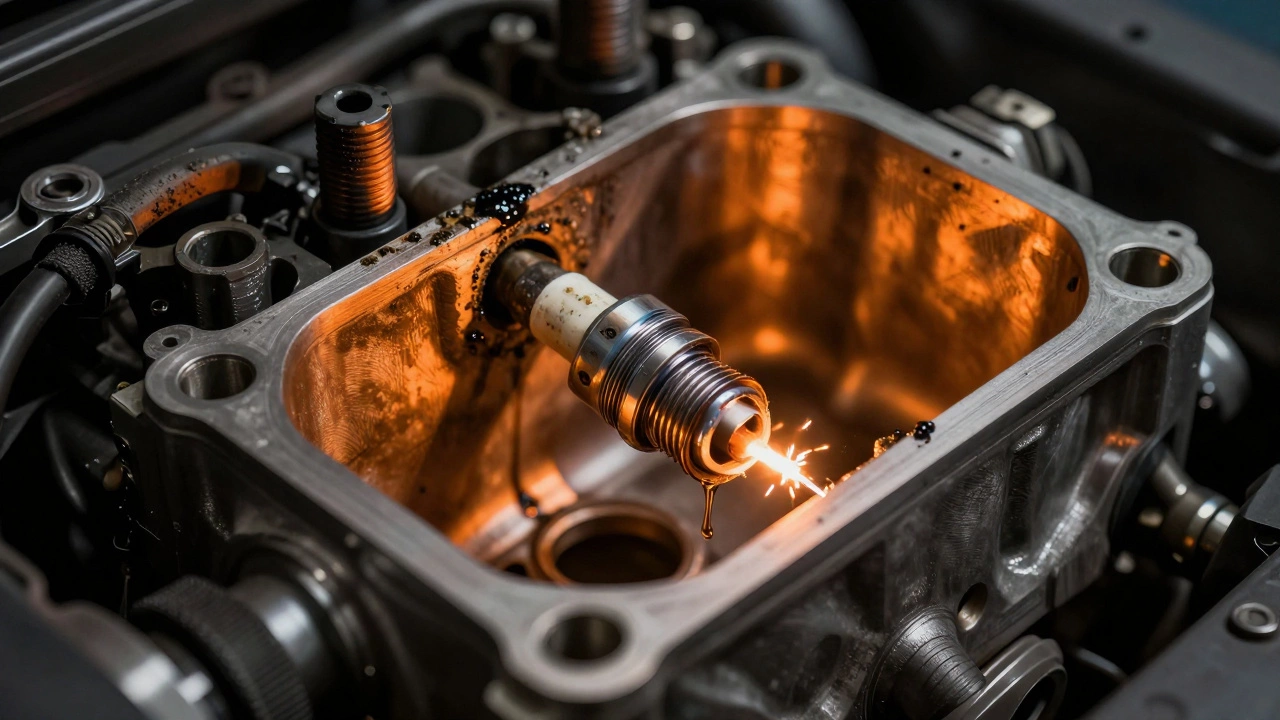
Every engine cylinder needs a spark to ignite the air-fuel mixture. That spark comes from the spark plug. It sits threaded into the cylinder head, with one end connected to the ignition coil and the other sticking into the combustion chamber. When the coil sends a high-voltage pulse, the spark plug jumps a tiny gap between its electrodes, creating a spark hot enough to ignite the fuel. This happens hundreds of times per minute, even at idle. If that spark is weak, late, or missing, the whole system stumbles.
What Happens When Spark Plugs Wear Out
Spark plugs don’t just stop working overnight. They degrade over time. After 30,000 to 100,000 miles (depending on type), the electrodes wear down, the gap widens, and carbon or oil buildup coats the insulator. When that happens, the spark becomes unreliable.
- Engine misfires: One or more cylinders fail to ignite properly. You’ll feel it as a jerking or stumbling sensation, especially when accelerating. Misfires are the #1 symptom of bad spark plugs.
- Hard starting: The engine cranks longer than usual before firing up. Cold mornings become a test of patience.
- Reduced fuel economy: Unburned fuel gets pushed out through the exhaust instead of turning into power. Your car might suddenly go from 28 mpg to 22 mpg without any other changes.
- Loss of power: Your car feels sluggish. Going uphill or merging onto the highway takes more gas and more time.
- Check Engine light: Modern cars detect misfires and log codes like P0300 (random misfire) or P0301-P0308 (cylinder-specific misfires). This isn’t a vague warning-it’s telling you exactly where the problem is.
Long-Term Damage to the Engine
Ignoring bad spark plugs doesn’t just hurt performance-it can hurt your engine. Here’s how:
- Unburned fuel washes away oil: When fuel doesn’t ignite, it drips down the cylinder walls and dilutes the engine oil. This reduces lubrication, increasing wear on pistons, rings, and cylinder walls.
- Catalytic converter damage: Unburned fuel enters the exhaust system and ignites inside the catalytic converter. This overheats it, melting the internal honeycomb structure. Replacing a converter costs $1,000-$2,500. Spark plugs cost $20-$100.
- Carbon buildup: Misfires leave behind thick carbon deposits on valves and pistons. Over time, this reduces compression and causes rough idling-even after you replace the plugs.
- Increased emissions: Your car will fail emissions tests. In places like Ontario, that means no registration renewal until the issue is fixed.

Signs You Need New Spark Plugs
You don’t need a mechanic to tell you when it’s time. Here’s what to watch for:
- Engine hesitation during acceleration
- Increased fuel consumption over a few tank fills
- Difficulty starting the car, especially in cold weather
- Rough idle-your car shakes when stopped at a light
- Check Engine light with misfire codes
Even if none of these show up, follow your owner’s manual. Most modern cars need spark plug replacement between 60,000 and 100,000 miles. Platinum and iridium plugs last longer, but they still wear out. Don’t wait for failure-plan for it.
What Happens If You Ignore It
One misfire might be annoying. Two or three per minute? That’s a ticking time bomb. In extreme cases, unburned fuel can flood the cylinders, hydrolock the engine, or cause a piston to crack. I’ve seen engines in Hamilton that ran for months with bad plugs-only to blow a head gasket or seize a cylinder. The repair bill was $4,000. The spark plugs? $85.
It’s not just about money. A misfiring engine can stall while driving. On a highway, that’s dangerous. On a snowy road in January? It’s a risk you can’t afford to take.
How to Check Your Spark Plugs
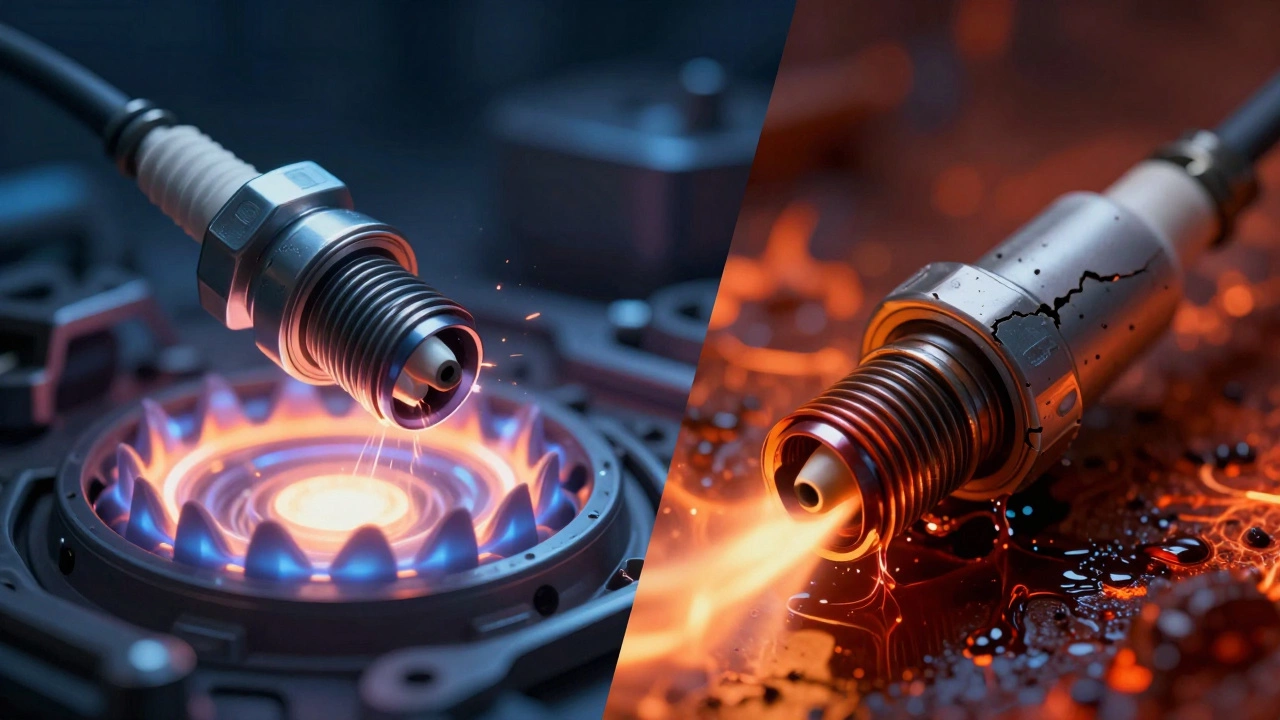
It’s easier than you think. Remove one plug (after disconnecting the coil or wire), clean off the dirt, and look at the tip:
- Normal: Light tan or grayish color, clean electrodes
- Carbon fouled: Dry, black, sooty deposits-sign of rich fuel mixture or weak spark
- Oil fouled: Wet, shiny black coating-oil is leaking into the combustion chamber
- Worn electrodes: Rounded or eroded tips, wide gap
- Cracked porcelain: White or brown cracks on the insulator-replace immediately
If you’re not comfortable doing it yourself, a mechanic can pull them in under an hour. Many auto shops offer free plug checks if you’re getting an oil change.
What to Replace Them With
Not all spark plugs are the same. Your car’s manual tells you the exact type: copper, platinum, or iridium. Copper plugs are cheaper but wear out faster. Iridium lasts longer and gives a stronger spark. Don’t go cheaper than recommended. Using the wrong plug can cause overheating or pre-ignition.
Also, always replace spark plugs in full sets. Mixing old and new ones creates uneven performance. And torque them properly-over-tightening cracks the porcelain. Under-tightening lets air leak and causes misfires.
Bottom Line
Spark plugs are one of the most overlooked parts in car maintenance. They’re cheap. They’re easy to replace. And when they fail, they don’t just make your car run poorly-they can destroy expensive components. If your car is acting up, don’t guess. Check the spark plugs. They’re often the simple fix you’ve been overlooking.
Replace them on schedule. Don’t wait for the engine to scream. A $100 investment today can save you $2,000 tomorrow.
Can bad spark plugs cause a car not to start at all?
Yes, especially if multiple plugs are completely failed or severely fouled. If the engine cranks but won’t fire, it’s often because the spark is too weak or absent in too many cylinders. In extreme cases, a car with bad spark plugs will turn over but never ignite the fuel, leaving you stranded.
How often should spark plugs be replaced?
It depends on the type. Standard copper plugs last 20,000-30,000 miles. Platinum plugs last 60,000-100,000 miles. Iridium plugs can go up to 120,000 miles. Always follow your vehicle’s owner’s manual. Many manufacturers recommend replacement every 60,000 miles as a safe average.
Can I drive with a bad spark plug?
You can, but you shouldn’t. Driving with a misfiring cylinder for more than a few days risks damaging the catalytic converter, fouling the oil, and increasing wear on internal engine parts. The longer you wait, the more expensive the repairs become. If the Check Engine light is flashing, stop driving and get it checked immediately.
Do spark plugs affect fuel economy?
Absolutely. A misfiring spark plug means unburned fuel is being wasted. Studies show that worn spark plugs can reduce fuel efficiency by up to 30%. In a car that normally gets 25 mpg, that’s a drop to 17.5 mpg-costing you hundreds of dollars a year in extra fuel.
Why do spark plugs fail so quickly in some cars?
Several reasons: poor-quality fuel, oil leaks into the combustion chamber, or using the wrong plug type. Engines with direct injection or turbochargers run hotter and put more stress on spark plugs. Also, if your car has a history of running rich (too much fuel), carbon buildup will shorten plug life. Regular maintenance and using the right fuel can help prevent premature failure.