 Jan, 20 2026
Air Filter Replacement Calculator
When Should You Replace Your Air Filter?
This tool calculates your next air filter replacement based on your vehicle's mileage and driving conditions. Follow the article's recommended replacement intervals for optimal engine performance.
Next Air Filter Replacement
Based on your vehicle type and driving conditions, replace your air filter within the next miles.
Most drivers don’t think about their air filter until the engine starts acting up-poor acceleration, rough idling, or worse, a check engine light. But replacing your air filter is one of the easiest and cheapest maintenance tasks you can do. A dirty air filter doesn’t just hurt fuel economy; it can cause long-term damage to your engine. The good news? You don’t need tools, a lift, or a garage. Most air filters can be replaced in under 10 minutes with your hands alone.
Why Your Air Filter Matters
Your engine needs clean air to burn fuel efficiently. For every gallon of gasoline your car burns, it pulls in about 10,000 gallons of air. That air carries dust, pollen, road debris, and even insects. The air filter traps all of it before it reaches the engine’s delicate internals. If the filter gets clogged, the engine struggles to breathe. That means less power, worse fuel economy, and increased emissions.
According to the U.S. Department of Energy, a clogged air filter can reduce fuel efficiency by up to 10%. That’s like paying an extra $0.30 per gallon at the pump. In Canada, where fuel prices stay high, that adds up fast. And if you drive on gravel roads or in dusty areas like southern Ontario or the Prairies, your filter clogs faster than you think.
How Often Should You Replace Your Air Filter?
Most manufacturers recommend replacing the air filter every 12,000 to 15,000 miles. But that’s just a baseline. If you drive in heavy traffic, dusty conditions, or during pollen season, check it every 6,000 miles. A visual inspection takes 30 seconds. Just pull the filter out and hold it up to the light. If you can’t see light through it, it’s time to replace it.
Some filters last longer-like high-performance reusable ones made from cotton gauze. But those need special cleaning and oiling. For most drivers, a standard paper filter replaced every year or two is the smart choice.
Tools You Need (Spoiler: Almost Nothing)
You don’t need a wrench, screwdriver, or jack. Just:
- A new air filter (make sure it’s the right one for your car)
- A clean cloth or paper towel
- Gloves (optional, but helpful if your hands are dirty)
That’s it. No special tools. No lift. No mechanic.
Step-by-Step: How to Install an Air Filter
- Locate the air filter box. Open your hood. Look for a large black plastic box near the front of the engine, usually connected to a thick rubber hose. It’s often labeled “Air Filter” or has an arrow pointing to it. On most cars, it’s on the passenger side, but check your owner’s manual if you’re unsure.
- Release the clips or screws. Most boxes use plastic clips you can pop open with your fingers. Some older models use screws or wingnuts. Don’t force them. If it’s stuck, wiggle gently. Some boxes have a single latch on the side-press and lift.
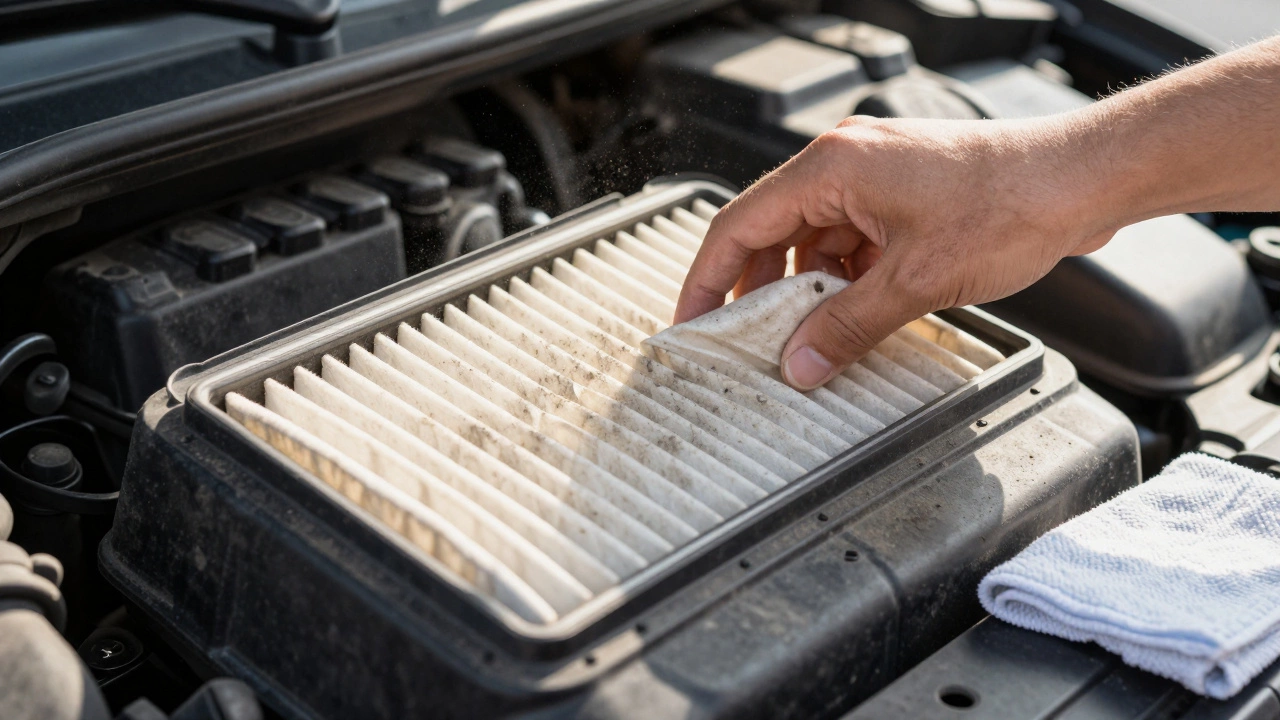
- Remove the old filter. Lift the old filter straight out. Don’t twist it. Shake it gently over a trash can to knock loose dirt off-but don’t blow on it. That just pushes dust deeper into the housing.
- Clean the housing. Use a dry cloth to wipe the inside of the box. Remove any leaves, twigs, or bugs that might have sneaked in. Don’t use water or cleaner. Moisture can damage sensors or cause rust.
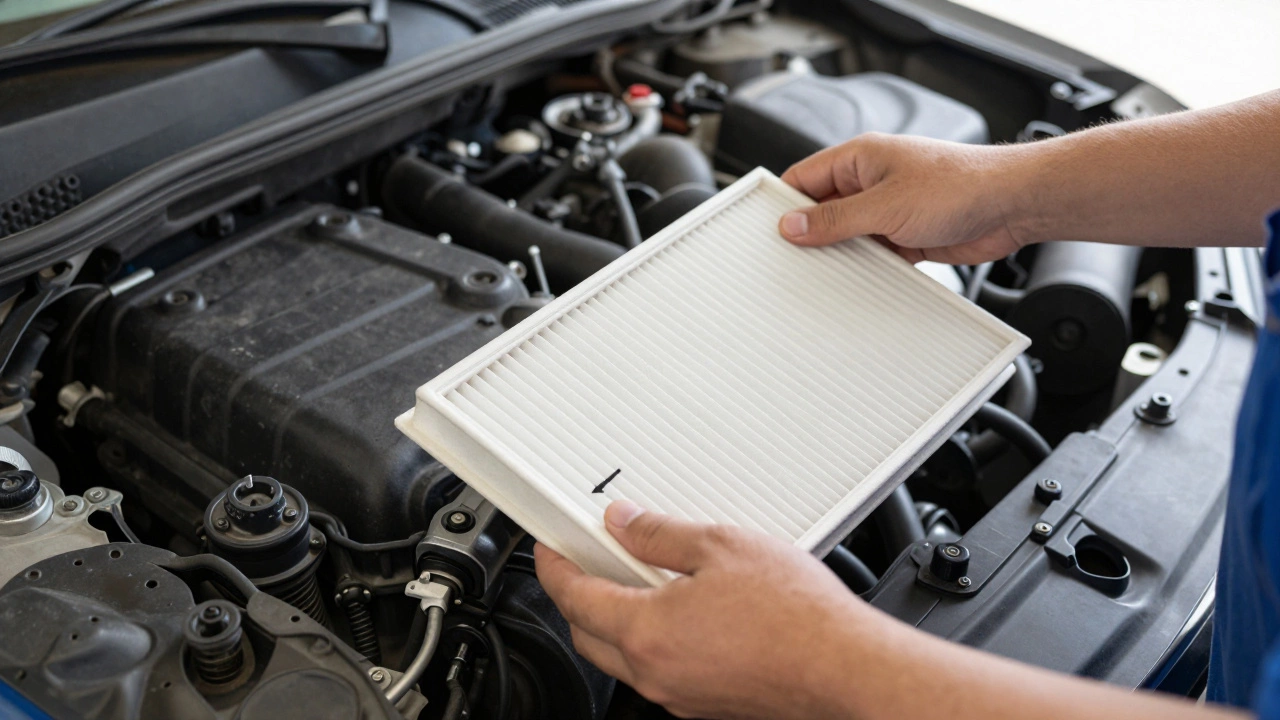
- Insert the new filter. Take the new filter out of the packaging. Notice the airflow arrow printed on the side. It should point toward the engine. Slide it in the same way the old one came out. Make sure it sits flat and doesn’t twist.
- Reattach the housing. Snap the lid back on. If it had screws, tighten them by hand-don’t over-tighten. You’re not sealing a jar, you’re just keeping dirt out. Give the box a gentle tug to make sure it’s secure.
- Close the hood. Double-check that the hood latch clicks. Start the engine. Listen. It should sound smoother and more responsive.
Common Mistakes to Avoid
Even simple jobs go wrong when people rush. Here’s what not to do:
- Don’t use the wrong filter. A filter that’s too big or small won’t seal right. Air will sneak around it, bringing dirt into your engine. Always match the part number from your old filter or your owner’s manual.
- Don’t skip cleaning the housing. Dirt left inside the box will just end up on your new filter. That defeats the whole purpose.
- Don’t force the lid shut. If it doesn’t click easily, the filter is misaligned. Take it out and try again.
- Don’t install it backwards. The airflow arrow must point toward the engine. Install it backward, and you’ll restrict airflow. Your engine won’t run well.
How to Pick the Right Air Filter
Not all air filters are the same. Here’s what to look for:
- OE Replacement - These are made to match the original factory filter. Best for most drivers. Brands like Fram, K&N (paper version), and Mann-Filter are reliable.
- Performance Filters - Made of cotton or foam, these claim better airflow. But they’re not always better. They need regular cleaning and oiling. If you don’t maintain them, they can let more dust through than a paper filter.
- Washable Filters - These are reusable but cost more upfront. Only worth it if you drive 25,000+ miles a year and don’t mind the upkeep.
In Hamilton, where winters are harsh and roads are salted, a standard paper filter is the safest bet. It traps fine dust and road grime better than most performance filters.
What Happens If You Don’t Replace It?
Ignoring a dirty air filter doesn’t cause instant failure. But over time, it leads to real problems:
- Reduced horsepower - Your engine can’t get enough air, so it can’t burn fuel efficiently. Acceleration feels sluggish.
- Worse fuel economy - The engine works harder to pull in air, burning more gas.
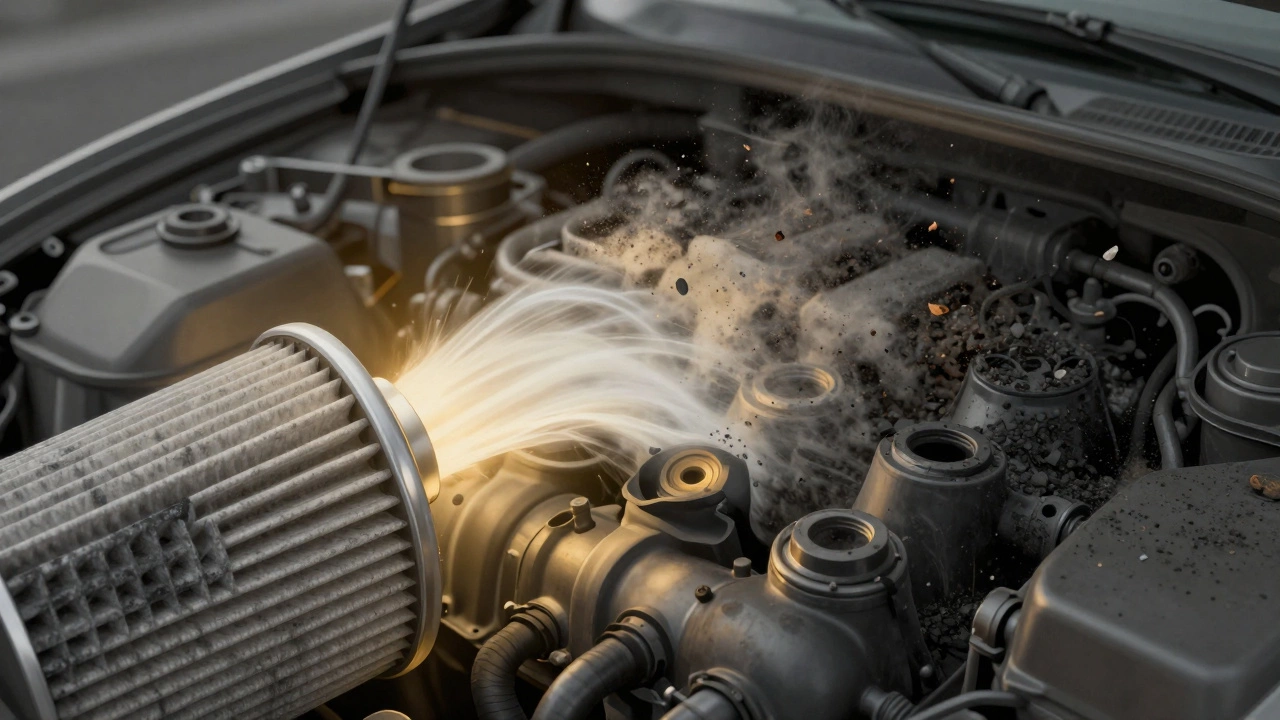
- Engine wear - Tiny particles get past the clogged filter and scratch cylinder walls. This wears out pistons and rings faster.
- Check engine light - Modern cars monitor airflow. A dirty filter can trigger codes like P0171 or P0174, signaling a lean air-fuel mixture.
One mechanic in Burlington told me he’s seen engines with 200,000 miles that still ran fine-because the owner changed the filter every 12,000 miles. He’s also seen engines with 80,000 miles that needed a rebuild because the filter was never replaced.
When to Call a Pro
Most air filters are DIY-friendly. But if:
- You can’t find the air box
- The clips are broken or missing
- The housing is cracked or warped
- You hear a hissing sound after installation
Then it’s time to visit a shop. A damaged housing can’t seal properly, and no filter will fix that.
Final Tip: Keep a Record
Write the date and mileage when you replace your air filter. Stick it on the inside of your hood or save it in your phone. That way, you won’t forget. And if you ever sell your car, showing proof of regular maintenance increases its value.
Changing your air filter is one of the few car maintenance tasks that actually makes a difference you can feel. Smooth idle. Better acceleration. Quieter engine. All from a $15 part and ten minutes of your time.
Can I clean and reuse my air filter?
Only if it’s a reusable performance filter made of cotton or foam. Standard paper filters are disposable. Cleaning them doesn’t restore their filtering ability-they’re designed to trap particles permanently. Trying to reuse a paper filter can let dust into your engine, which causes damage.
Does the air filter affect my car’s AC?
No. The engine air filter and the cabin air filter are two different parts. The cabin filter cleans the air coming into your car’s interior through the vents. It’s usually behind the glovebox. If your AC smells musty or airflow is weak, that’s the cabin filter you need to replace-not the engine air filter.
How do I know which air filter fits my car?
Check the part number on your old filter. It’s printed on the side. You can also use your vehicle’s year, make, model, and engine size to look up the correct filter online or at an auto parts store. Most retailers have in-store lookup tools. Never guess-using the wrong size can cause serious engine damage.
Is it safe to drive without an air filter?
Never. Even for a short drive. Without a filter, dirt and debris enter your engine’s cylinders. That grit scratches the cylinder walls, damages pistons, and can destroy valves and rings. The damage is expensive to fix and often not covered by warranty.
Why does my engine sound louder after installing a new filter?
It’s probably not the filter. A new filter improves airflow, which can make the engine sound more responsive-but not louder. If you hear a new hissing or whistling noise, the housing isn’t sealed right. Double-check that the lid is fully locked and the filter is seated properly. A small gap lets air leak in, which can cause performance issues.