 Sep, 29 2026
Exhaust Tone Estimator
Select your vehicle specifications to estimate the resulting exhaust tone profile.
Estimated Tone Profile
Recommendation
Analysis will appear here.
Configure your exhaust settings and click analyze to see your estimated sound profile.
You want that low, throaty rumble when you hit the gas. Not the high-pitched drone that gives you a headache on the highway, and definitely not the quiet hum of a stock factory setup. You want power you can hear. But here is the catch: most people buy the wrong muffler for deep sound because they confuse volume with depth. They think louder equals deeper. It doesn’t. Volume is about how much noise comes out; depth is about the frequency of that noise.
If you’ve ever wondered why your buddy’s V8 sounds like thunder while your modified four-cylinder sounds like a angry lawnmower, it’s not just the engine. It’s the entire exhaust path, but specifically the muffler design, plays a huge role in shaping that final note. Let’s break down exactly what makes a muffler sound deep, which types actually deliver it, and how to avoid the common pitfalls that turn your dream build into a noisy mistake.
The Physics of Deep Sound: Frequency vs. Volume
To get a deep sound, you need to understand sound waves. A "deep" sound is a low-frequency wave. Think of a bass drum versus a snare drum. The bass drum moves more air at a slower rate, creating those low rumbles. A snare creates sharp, high-frequency cracks. Your exhaust system is trying to push gases out, and the shape of the pipes and chambers dictates how those pressure waves escape.
Stock mufflers are designed for comfort. They use complex internal baffles and packing materials (like fiberglass or steel wool) to absorb high-frequency energy. This kills the drone, but it also kills the character. To get depth, you generally need to reduce the absorption of low frequencies while allowing them to resonate. This is where the type of muffler matters most.
| Muffler Type | Sound Character | Best For | Drone Risk |
|---|---|---|---|
| Turbo Muffler | Clean, moderate tone | Daily drivers, mild mods | Low |
| Chambered Muffler | Deep, aggressive, classic muscle | V8s, trucks, performance cars | Medium-High |
| Straight-Through (Glasspack) | Loud, raspy, unfiltered | Race cars, loud enthusiasts | High |
| Reversed Cone | Balanced, slightly deeper than turbo | Street builds wanting subtlety | Low-Medium |
Chambered Mufflers: The King of Depth
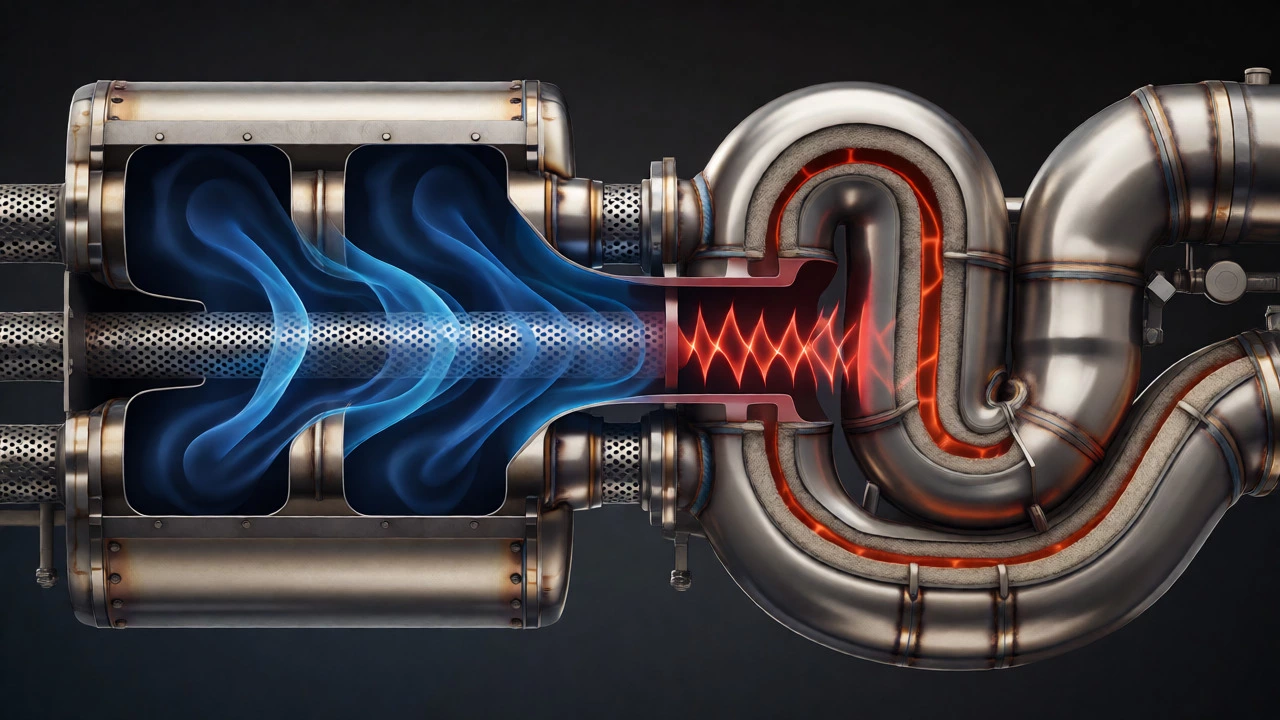
If you ask any seasoned mechanic what makes a car sound truly deep, they will almost always point to the chambered muffler also known as a straight-through baffleless design with internal dividers. Unlike standard mufflers that rely on packing material to soak up sound, chambered units use empty metal chambers separated by perforated tubes.
Here is how it works: Exhaust gases enter the muffler and bounce around inside these hollow chambers. The size and length of these chambers act like a musical instrument’s body. Larger chambers allow lower frequencies to resonate longer before exiting. This creates that rich, rolling rumble associated with classic American muscle cars. Brands like Flowmaster popularized this style, and their designs are still the gold standard for deep tones today.
However, there is a trade-off. Chambered mufflers don’t filter sound as aggressively as packed ones. This means you might experience some cabin drone-a constant humming noise inside the car at certain RPMs, usually between 2,000 and 3,000. If you have a well-insulated cabin, this might not bother you. If you drive an older truck with thin glass, it could become annoying on long trips.
Turbo Mufflers: Clean but Not Always Deep
Many people start with turbo-style mufflers which feature a serpentine internal path wrapped in sound-absorbing material. These are great for cleaning up the exhaust note. They remove the raspiness and harshness often found in cheaper exhaust systems. But do they make a sound deep?
Generally, no. Turbo mufflers are designed to be quiet and smooth. They dampen both high and low frequencies somewhat evenly. While they provide a pleasant, refined tone, they rarely produce the aggressive low-end growl enthusiasts crave. If you pair a turbo muffler with a high-flow cat-back system, you’ll get a cleaner sound, but it will likely lack the visceral punch you’re looking for. They are best if you want to keep things legal and neighbor-friendly while still sounding better than stock.
Straight-Through Mufflers: Loud Isn’t the Same as Deep
Then there are straight-through mufflers often called glasspacks or Dynomax-style units. These consist of a perforated tube surrounded by sound-deadening material, with no internal baffles to block flow. Air goes in one end and out the other with minimal resistance.
This design increases volume significantly. Because there is little restriction, the engine breathes easier, which can help power. But acoustically, it tends to amplify higher frequencies along with the lows. The result is often a loud, raspy, or metallic sound rather than a smooth, deep rumble. Unless you have a very large displacement engine (like a big-block V8 or a diesel), straight-through mufflers often sound chaotic rather than authoritative. They are excellent for race applications where volume is secondary to flow, but less ideal for street-driven daily vehicles seeking a sophisticated deep tone.
It’s Not Just the Muffler: Pipe Diameter and Resonators
You can buy the deepest-sounding muffler in the world, but if your exhaust piping is too narrow, you won’t hear it properly. Pipe diameter acts as a tuning fork. Wider pipes (typically 2.5 inches or larger for most street cars) allow more air volume to pass through, which supports lower frequencies. Narrower pipes (1.75 to 2 inches) tend to raise the pitch of the exhaust note, making it sound thinner and higher-pitched, regardless of what muffler you attach.
Another critical component is the resonator a smaller cylindrical device placed upstream of the muffler. Many people delete resonators thinking they only add backpressure. In reality, resonators are tuned to cancel out specific annoying frequencies (usually the high-pitched whine). Removing them can sometimes make the sound deeper by eliminating that interference, but it can also introduce drone. Conversely, adding a tuned resonator can enhance the low-end thump by reinforcing fundamental frequencies. Experimenting with resonator placement or swapping to a larger-diameter resonator is a cheap way to tweak your tone before buying a new muffler.
Engine Configuration Matters More Than You Think
Let’s be real: A four-cylinder Honda Civic will never sound like a Ford Mustang GT, no matter what muffler you bolt on. The firing order and cylinder count dictate the fundamental frequency of the exhaust pulses.
- V8 Engines: Naturally prone to deep, uneven rumble due to cross-plane crankshafts. Chambered mufflers shine here.
- V6 Engines: Can achieve a nice deep tone, but often require careful tuning of pipe lengths to avoid a "buzzing" sound.
- Inline-4 Engines: Typically produce a higher-pitched buzz. To get depth, you need significant exhaust manipulation, often involving equal-length headers and large-diameter piping, but even then, the character remains distinct from a V8.
- Diesel Engines: Already have a low-frequency idle. Restrictive mufflers can actually deepen the chug, while open systems may sound flatter.
If you have a four-cylinder, manage your expectations. You are aiming for a richer, fuller tone, not necessarily a subwoofer-like rumble. Focus on removing raspiness first, then look for depth.
Installation Tips for Maximum Depth
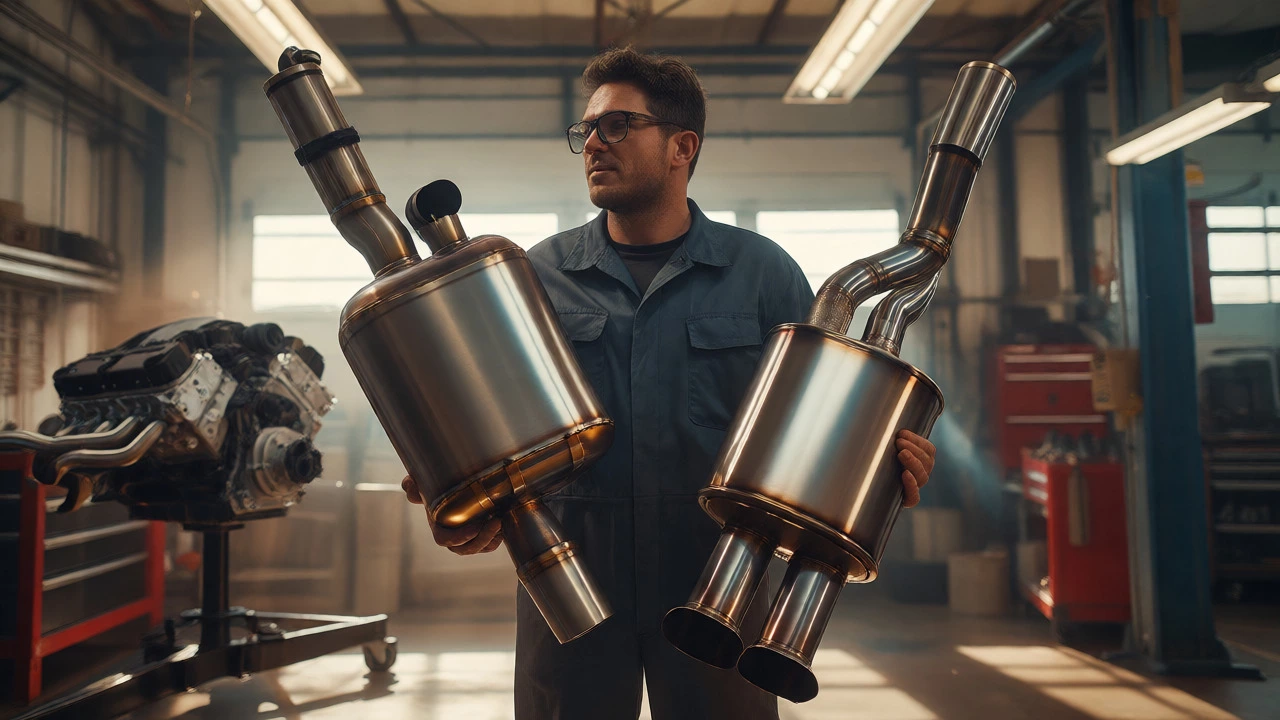
Once you’ve chosen your gear, installation affects the sound. Here are three rules of thumb from years of wrenching in Hamilton garages:
- Don’t Mix Designs Randomly: If you put a turbo muffler behind a chambered mid-pipe, you might lose the benefits of both. Stick to a cohesive system philosophy. If you want deep, go full chambered or hybrid setups designed to work together.
- Check for Leaks: Even a small leak at the manifold gasket can ruin a deep tone, replacing it with a sharp hiss. Ensure all clamps are tight and gaskets are fresh.
- Break-In Period: New mufflers, especially those with packing material, often sound harsh for the first few hundred miles. The heat settles the materials. Give it time before judging the final tone.
Also, consider your vehicle’s age. Rusty tailpipes or corroded hangers can create rattles that interfere with the perceived depth. Fix mechanical noises before blaming the muffler.
Common Myths About Deep Exhaust Sounds
There is a lot of bad advice online. Let’s clear up two big myths.
Myth 1: Cutting the muffler makes it deeper. It makes it louder and raspier. Without the internal structure to reflect and tune waves, you just get raw noise. It lacks the musicality of a tuned system.
Myth 2: Bigger is always better. Going from a 2-inch to a 3-inch exhaust on a small engine can actually hurt performance and make the sound thinner because the exhaust gas velocity drops. Too much space allows sound waves to dissipate chaotically rather than forming a coherent low note. Match your pipe size to your engine’s airflow needs.
Final Verdict: What Should You Buy?
If you want a deep sound, start with your engine type. If you have a V8 or a large-displacement engine, a Flowmaster Super 40 or similar chambered muffler is your best bet for that classic muscle car rumble. Pair it with 2.5-inch or 3-inch stainless steel piping.
If you have a four-cylinder or six-cylinder, look for a reversed cone muffler or a high-quality turbo muffler paired with a resonator delete (if drone isn’t an issue). You won’t get a V8 rumble, but you can get a sportier, fuller tone that stands out without being obnoxious.
Avoid cheap, generic "universal" mufflers. They often have poor internal construction that breaks down quickly, leading to a rattly, inconsistent sound after a year. Invest in branded products with good reviews for your specific vehicle model. And remember, sound is subjective. Visit a shop that lets you listen to different configurations on similar cars before you commit. Your ears are the final judge.
Does deleting the resonator make the exhaust deeper?
Not necessarily. Deleting the resonator usually removes high-frequency filtering, which can make the sound louder and potentially raspier. However, in some cases, it can eliminate a conflicting frequency that masks the low-end, making the base tone feel deeper. It depends heavily on the specific vehicle's exhaust geometry. Test it before committing to a full delete.
Will a bigger muffler make my car faster?
A larger muffler reduces backpressure, which can improve top-end horsepower, but it rarely adds significant power on its own. On smaller engines, too much free flow can actually hurt low-end torque. The primary benefit of a larger muffler is acoustic change, not major performance gains.
Why does my new muffler sound raspy?
Raspiness is caused by high-frequency exhaust pulses escaping without sufficient damping. This is common with straight-through or poorly tuned chambered mufflers. Adding a resonator or switching to a muffler with more internal baffling (like a turbo style) can clean up the sound.
Is a chambered muffler louder than a turbo muffler?
Yes, generally. Chambered mufflers offer less sound attenuation, resulting in higher volume and a more aggressive tone. Turbo mufflers are designed to be quieter and smoother, prioritizing comfort over aggression.
Can I mix a turbo muffler with a chambered mid-pipe?
You can, but it may dilute the desired effect. The turbo muffler will dampen the aggressive tones generated by the chambered mid-pipe. If you want maximum depth, stick to consistent technology throughout the exhaust path.