 May, 5 2026
Spark Plug Upgrade Savings Calculator
Input Your Data
Your Potential Benefits
Estimated Annual Fuel Savings
Fuel Saved (Liters)
0 LNew Consumption
0 L/100kmYou’ve just had your spark plugs replaced by the mechanic. The invoice is paid, and you’re driving home wondering if that money was actually worth it. Did your car just get faster? Is it running smoother? Or did you just pay for something that wasn’t broken?
The short answer is: it depends on how bad your old plugs were. If they were brand new, you won’t feel a thing. But if they were worn out, fouled, or simply past their service life, the difference can be startling. It’s not just about horsepower; it’s about how your car breathes, burns fuel, and responds when you press the gas pedal.
What Spark Plugs Actually Do in Your Engine
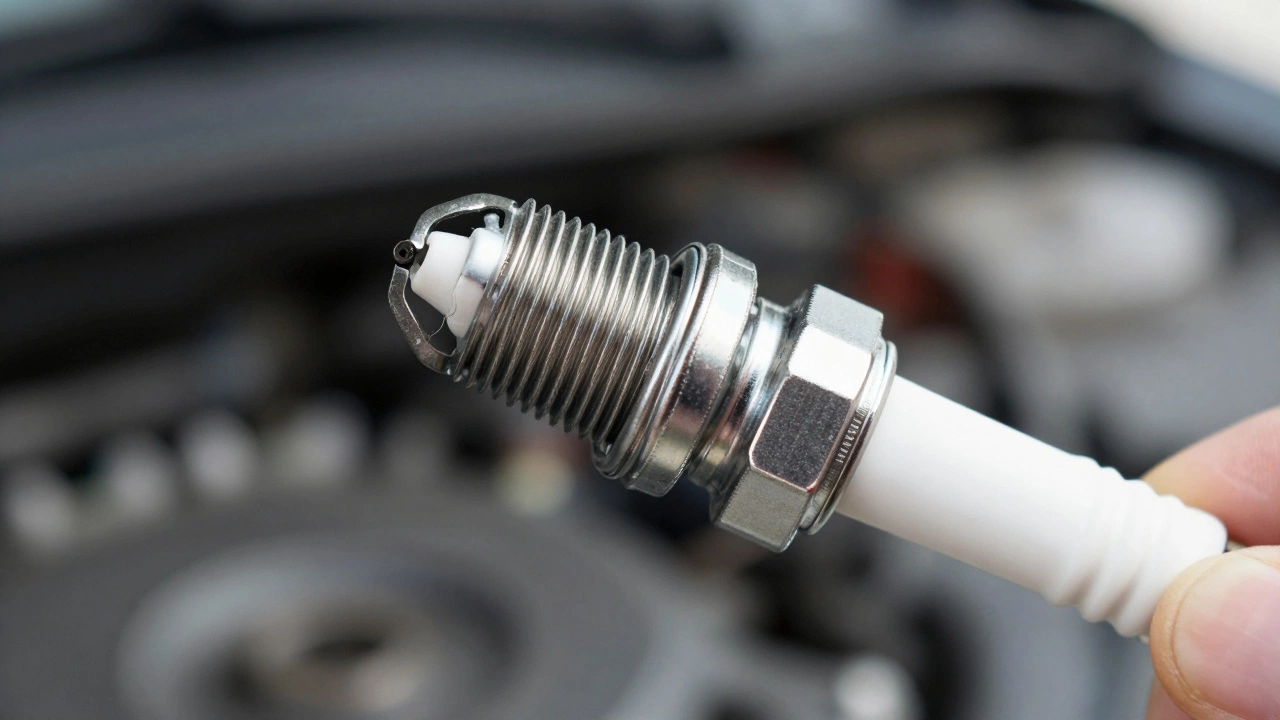
To understand why you might notice a change, you have to look at what happens inside your engine cylinders. Internal combustion engines rely on a precise mix of air and fuel being compressed and then ignited. That ignition comes from a tiny electrical spark jumping across a gap in the plug.
This spark ignites the air-fuel mixture, creating a controlled explosion that pushes the piston down. This push turns the crankshaft, which eventually moves your wheels. If the spark is weak, late, or inconsistent, the fuel doesn’t burn completely. This leads to wasted energy, unburnt fuel dripping into your exhaust, and a rough-running engine. New plugs ensure that every drop of fuel is used efficiently.
The Immediate Signs You’ll Feel (and Hear)
If your previous plugs were significantly worn, the improvements usually happen within the first few drives. Here are the specific changes most drivers report:
- Smoother Idling: Have you ever noticed your car shaking slightly when stopped at a red light? Worn plugs cause misfires, which make the engine run unevenly. New plugs often eliminate this vibration instantly.
- Better Acceleration: Old plugs struggle to keep up with high RPMs. When you floor it to pass a truck, an old engine might hesitate or ‘bog down’. Fresh plugs provide a consistent spark even under heavy load, making acceleration feel sharper and more linear.
- Quieter Exhaust: A healthy engine has a rhythmic, smooth sound. Misfiring engines create a chugging or popping noise because unburnt fuel explodes in the exhaust pipe. New plugs restore that clean rhythm.
- Easier Cold Starts: In colder weather, a weak spark makes starting difficult. New plugs jump the gap more easily, meaning your engine cranks less before catching.
If your car was already running perfectly, these changes will be subtle. You might not ‘feel’ them, but you’ll likely notice them over time through better responsiveness.
Does It Improve Fuel Economy?
This is the big question for most budget-conscious drivers. Yes, replacing worn spark plugs can improve your fuel efficiency. However, don’t expect miracles. We’re talking about a modest gain, typically between 1% and 5%.
Here is the logic: incomplete combustion wastes fuel. If your old plugs were causing misfires, your engine computer (ECU) might have been injecting extra fuel to compensate, or you were literally pouring unburnt gasoline out of your tailpipe. By fixing the ignition source, you ensure that nearly all the fuel you pump in contributes to moving the car.
For a driver who puts 20,000 kilometers on their car annually, a 3% improvement could save enough money to cover the cost of the plugs and labor within a year. It’s not a windfall, but it’s a solid return on investment.

When Will You NOT Notice a Difference?
It’s important to manage expectations. There are scenarios where changing spark plugs yields zero perceptible benefit:
- Recent Replacement: If you changed them last year, your current plugs are still near peak performance. Swapping them now is premature maintenance.
- Mild Driving Habits: If you only drive short distances at low speeds, your plugs wear slower. The degradation might be minimal.
- Other Underlying Issues: If your car has a clogged air filter, dirty fuel injectors, or a failing mass airflow sensor, new spark plugs won’t fix the problem. The engine is starved of air or fuel, so the spark quality becomes irrelevant.
- Incorrect Plug Type: Installing the wrong heat range or gap specification can actually make performance worse. Always use the OEM-recommended type.
Iridium vs. Copper: Does the Material Matter?
The type of spark plug you choose plays a huge role in whether you notice a difference. Not all plugs are created equal. The electrode material determines durability and spark consistency.
| Material | Lifespan | Performance Benefit | Cost |
|---|---|---|---|
| Copper | 20,000 - 30,000 km | Best conductivity, but wears fast | Low |
| Platinum | 60,000 - 80,000 km | Good balance of life and cost | Medium |
| Iridium | 100,000+ km | Finest wire, strongest spark, longest life | High |
If you upgrade from copper to iridium, you might notice a slight improvement in throttle response. Iridium tips are much thinner, allowing for a more focused spark that ignites the air-fuel mixture faster. This is particularly noticeable in high-performance engines or direct-injection systems.
How Long Until the Check Engine Light Goes Off?
If your check engine light came on due to a misfire code (like P0300-P0304), replacing the plugs should resolve the issue. However, the light won’t turn off immediately after you drive away.
Your car’s computer needs to run a few self-tests to confirm the problem is gone. This usually takes 10-20 drive cycles. A drive cycle is defined as starting the car, driving for a bit, stopping, and turning it off. If the light doesn’t go off after a week of normal driving, you may need a scan tool to clear the code manually, or there might be another underlying issue like a bad coil pack.
Pro Tips for Maximizing the Benefit
To get the most out of your new spark plugs, keep these points in mind:
- Check the Gap: Even pre-gapped plugs can shift during shipping. Verify the gap matches your owner’s manual specifications using a feeler gauge.
- Torque Correctly: Over-tightening can crack the ceramic insulator; under-tightening can cause overheating and loss of compression. Use a torque wrench.
- Replace Ignition Coils if Needed: If your coils are old, they might not deliver enough voltage to new high-resistance plugs. Consider swapping both if the coils are original equipment.
- Use Quality Parts: Cheap aftermarket plugs often fail prematurely. Stick to reputable brands like NGK, Denso, or Bosch.
How often should I replace spark plugs?
Most modern cars recommend replacement every 80,000 to 100,000 kilometers for iridium or platinum plugs. Older cars with copper plugs may need them every 30,000 to 40,000 kilometers. Always check your owner’s manual for the specific interval for your vehicle.
Can bad spark plugs damage my catalytic converter?
Yes. Unburnt fuel from misfiring plugs enters the exhaust system and burns in the catalytic converter. This excessive heat can melt the internal honeycomb structure, leading to a very expensive repair. Replacing plugs on time protects this component.
Why does my car feel sluggish after changing spark plugs?
This is rare but possible. It could mean the plugs were installed incorrectly (wrong gap or cross-threaded), the wrong type was used, or a wiring connection was disturbed during installation. Double-check the installation and consult a mechanic if the issue persists.
Do spark plugs affect horsepower?
Not directly. Spark plugs do not add horsepower. They restore lost efficiency. If your old plugs were severely worn, new ones will return your engine to its factory-specified power output, which might feel like a gain compared to the degraded state.
Is it worth doing spark plug replacement yourself?
If you have basic mechanical skills and the right tools (socket set, torque wrench, extension bar), yes. It saves significant labor costs. However, some engines have hard-to-reach plugs that require removing other components, making professional help advisable.