 Jun, 2 2026
Oil Change Risk Calculator
Calculate the risk level of driving past your scheduled oil change interval based on miles driven and oil type.
Assessment Result
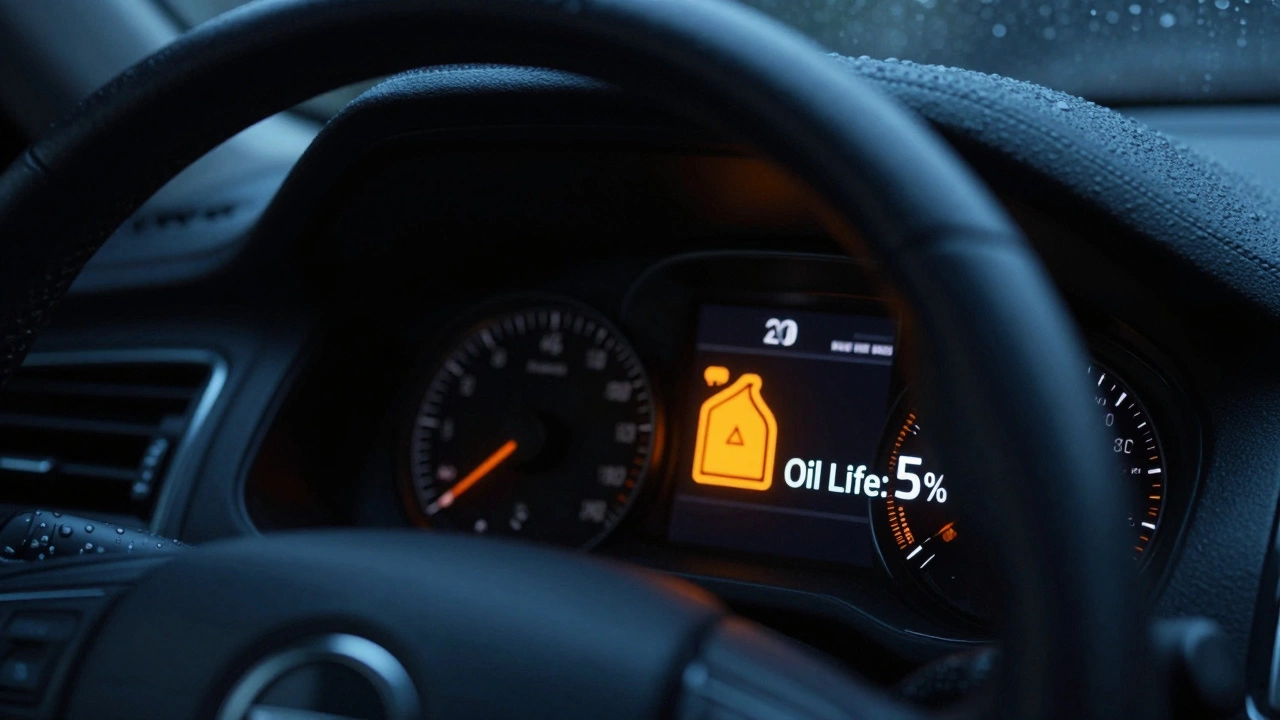
You see the dashboard light blink. The reminder says "Oil Life Remaining: 5%". You are busy, it is raining, or you just think you can squeeze out a few more trips to the grocery store before heading to the shop. It is a common thought. But how many miles can you actually go past your scheduled oil change before things go wrong?
The short answer is: none. The realistic answer is: maybe 200 to 500 miles if you are careful, but every mile adds risk. Going significantly past the limit-say, over 1,000 miles-is gambling with your engine's lifespan. Engine oil does not just lubricate; it cools, cleans, and prevents corrosion. When it breaks down, those functions fail.
Quick Summary: Key Takeaways
- Most modern cars use synthetic oil, which lasts longer than conventional oil but still degrades over time and mileage.
- Going 200-500 miles past the limit is usually safe for healthy engines, but increases wear risks.
- Exceeding 1,000 miles past due can lead to sludge buildup, reduced fuel economy, and potential engine failure.
- Severe driving conditions (towing, stop-and-go traffic, extreme cold) shorten oil life significantly.
- Check your owner’s manual for specific intervals rather than relying on generic "every 3,000 miles" advice.
Understanding How Engine Oil Actually Works
To understand why you cannot just ignore the warning, you need to know what the oil is doing inside your engine. Think of engine oil as a fluid that reduces friction between moving metal parts while carrying away heat and contaminants. Inside your engine, pistons move up and down thousands of times per minute. Without oil, these metal surfaces would grind against each other, generating immense heat and wearing down rapidly.
Over time, oil breaks down. Heat causes oxidation, which turns the oil into varnish and sludge. Dirt, metal shavings, and combustion byproducts get trapped in the oil filter and suspended in the fluid. As the oil ages, its viscosity changes. It becomes thinner or thicker depending on the type of degradation, losing its ability to form a protective film on engine components.
Modern engines are precision machines. Tolerances are incredibly tight. If the oil loses its viscosity index improvers or anti-wear additives, even microscopic particles can cause scoring on cylinder walls or bearing surfaces. This is not theoretical; mechanics see this daily when pulling apart neglected engines.
The Difference Between Conventional and Synthetic Oil
Not all oil is created equal. The type of oil you use dictates how long it can last before becoming harmful. There are three main categories you will encounter at the pump or service center:
- Conventional Oil: Derived directly from crude oil. It works fine for older vehicles or simple engines but breaks down faster under high heat and stress. Typical interval: 3,000 to 5,000 miles.
- Synthetic Blend: A mix of conventional and synthetic base stocks. Offers better protection than pure conventional oil at a lower cost than full synthetic. Typical interval: 5,000 to 7,500 miles.
- Full Synthetic Oil: Chemically engineered molecules designed for stability and performance. It resists breakdown much better and flows more easily in cold weather. Typical interval: 7,500 to 10,000+ miles.
If you have a modern car manufactured after 2010, it likely uses full synthetic oil. These oils are robust, but they are not immortal. Even synthetic oil loses its detergent properties over time. Once those detergents are gone, sludge begins to form. Sludge blocks oil passages, starving critical components like camshafts and lifters of lubrication.
What Happens When You Push Past the Limit?
Let us look at the real-world consequences of ignoring the oil life monitor. We can break this down into stages based on how far past the due date you go.
Stage 1: 0-500 Miles Past Due
In this zone, most healthy engines will suffer no immediate catastrophic failure. However, you are already operating outside the manufacturer's warranty guidelines. The oil is past its peak efficiency. Fuel economy may drop slightly because increased friction requires more energy to turn the crankshaft. You might notice the engine running a bit hotter under load, such as when climbing hills or towing.
This is the "grace period." If you hit an unexpected delay and add 200 miles to your trip, you are likely fine. Just do not make it a habit.
Stage 2: 500-1,000 Miles Past Due
Now the risks increase noticeably. The oil has oxidized further. Viscosity modifiers may have sheared off, meaning the oil is either too thin to protect bearings or too thick to circulate properly during cold starts. Cold starts are when engines wear out the most because oil hasn't fully circulated yet. Old, degraded oil takes longer to reach optimal temperature and flow.
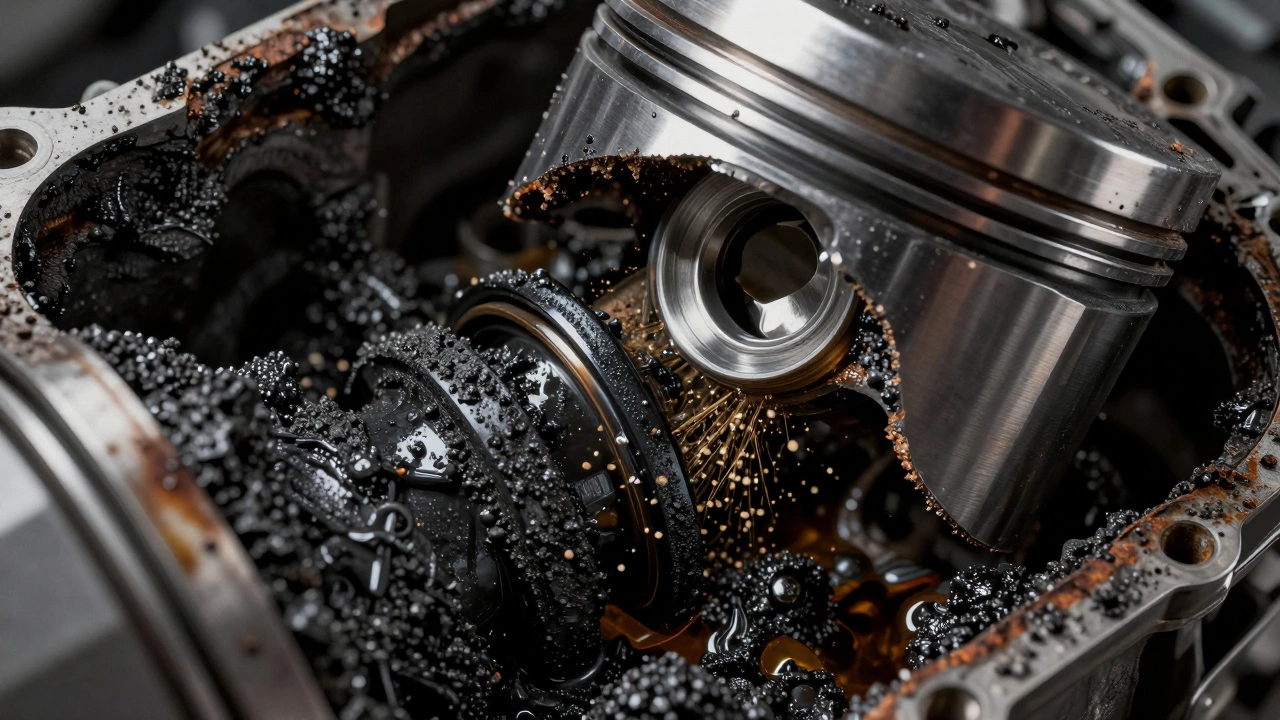
During this stage, sludge formation accelerates. You might start seeing black, gritty residue around the valve cover gasket or dipstick tube. While not always visible externally, internal deposits are building up on piston rings and intake valves. This leads to reduced compression and power loss.
Stage 3: Over 1,000 Miles Past Due
This is dangerous territory. At this point, the oil filter is likely clogged with debris. Most filters have a bypass valve that opens when the filter is blocked, allowing unfiltered oil to flow through the engine. Unfiltered oil contains abrasive particles that act like sandpaper on your engine internals.
Bearing failure becomes a real possibility. Main bearings and rod bearings rely on a thin film of pressurized oil. If that film breaks down due to poor lubrication quality, metal touches metal. This generates intense heat, leading to spun bearings or seized pistons. Repair costs here often exceed $3,000 to $6,000, sometimes requiring a complete engine replacement.
| Miles Past Due | Risk Level | Potential Issues | Action Required |
|---|---|---|---|
| 0-200 | Low | Slight reduction in fuel efficiency | Schedule appointment soon |
| 200-500 | Medium | Increased wear, minor sludge formation | Drive gently, avoid heavy loads |
| 500-1,000 | High | Viscosity breakdown, filter bypass risk | Get service immediately |
| 1,000+ | Critical | Sludge blockage, bearing failure, seizure | Do not drive; tow to mechanic |
Factors That Shorten Oil Life Faster Than Mileage
Mileage is only one part of the equation. Your driving habits and environment play a huge role in how quickly oil degrades. Manufacturers define "severe service" conditions that require more frequent changes. If any of these apply to you, your effective oil life is shorter.
- Stop-and-Go Traffic: Frequent idling and low-speed driving prevent the engine from reaching optimal operating temperature. Moisture and fuel dilute the oil, causing it to break down faster.
- Towing or Carrying Heavy Loads: Extra weight puts more strain on the engine, increasing heat and pressure on the oil film.
- Dusty or Dirty Conditions: Driving on unpaved roads allows more dirt to enter the engine through air intakes, contaminating the oil.
- Extreme Temperatures: Very hot climates accelerate oxidation. Very cold climates can cause condensation to build up in the oil pan if the engine never gets warm enough to evaporate it.
- Short Trips: Drives under 5 miles don't allow the engine to fully warm up. This leads to fuel washing down cylinder walls and mixing with oil, reducing its lubricating ability.
If you live in Hamilton, Canada, our winters are particularly harsh. Cold starts are frequent, and if you mostly drive short distances to work or school, your oil degrades much faster than someone driving highway miles in Arizona. In these cases, sticking to the "normal" interval listed in the manual might not be enough. Consider changing every 5,000 miles instead of 7,500 if you fall into the severe category.
How to Check If Your Oil Is Bad Before It Fails
You do not have to wait for the dashboard light. You can check your oil yourself in minutes. Here is how to tell if your oil needs changing right now, regardless of the mileage counter.
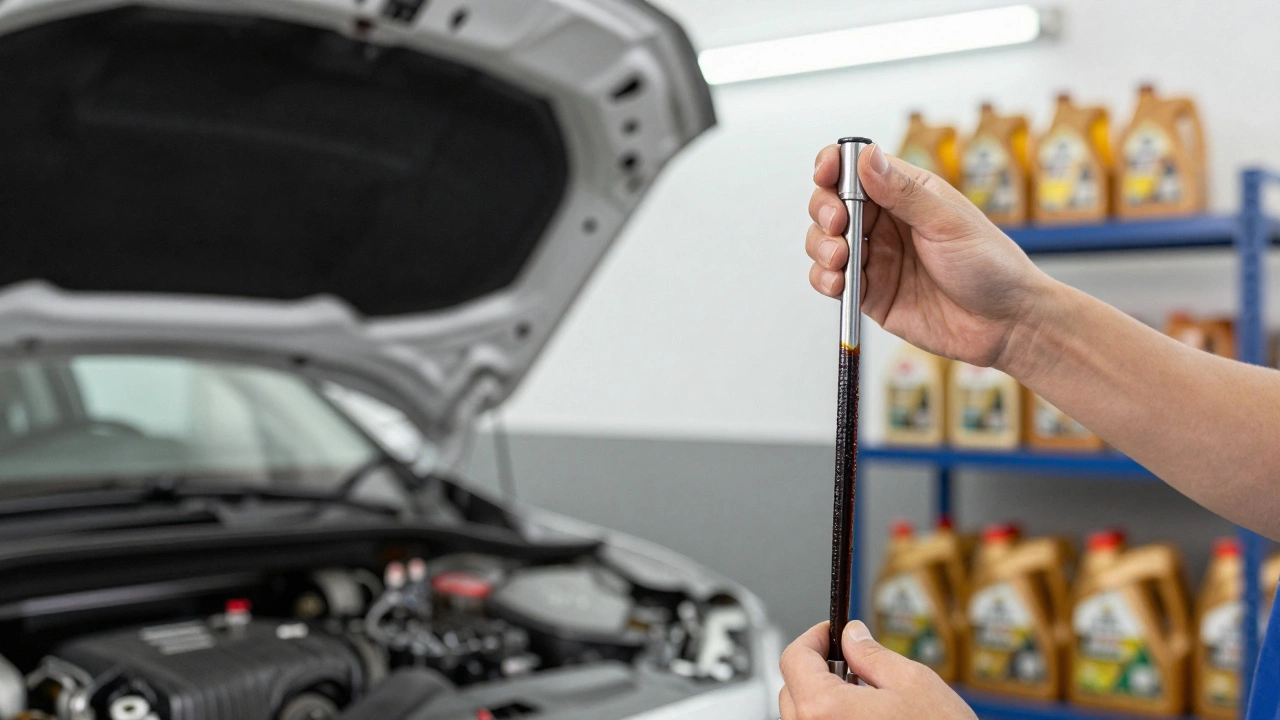
First, park on level ground and let the engine cool for a few minutes. Pull out the dipstick, wipe it clean, reinsert it fully, then pull it out again. Look at the oil on the end.
- Color: Fresh oil is amber or light brown. Used oil should be dark brown or black. Black oil is normal for used oil, but if it looks milky or frothy, you have a coolant leak (head gasket issue). Do not drive the car.
- Texture: Rub a small amount between your fingers. If it feels gritty or sandy, there is excessive metal wear or dirt contamination. It is time for a change.
- Smell: If it smells strongly of gasoline, fuel is diluting the oil. This happens from frequent short trips or a rich fuel mixture. Diluted oil cannot lubricate properly.
- Level: If the oil is below the minimum mark, top it up immediately. Low oil levels mean less cooling and lubrication capacity.
Many modern cars have electronic oil life monitors that calculate remaining life based on driving patterns, engine temperature, and RPM. These are generally accurate. Trust them. If the monitor says 10%, treat it as a warning. If it says 0%, change it within the next 200 miles.
Cost-Benefit Analysis: Why Skipping Is Not Worth It
People skip oil changes to save money or time. Let us look at the numbers. A standard oil change with synthetic oil costs between $60 and $100 CAD in most Canadian cities. An extended interval oil change might save you $50 if you push it twice as long, but you risk thousands in repairs.
Consider the value of your vehicle. A five-year-old sedan might be worth $15,000. A major engine repair could cost $4,000. That is nearly 30% of the car's value gone in one mistake. For newer cars under warranty, neglecting maintenance can void coverage. Manufacturers track service records. If you claim an engine failure but have no proof of regular oil changes, the warranty denial is easy for them to justify.
Time-wise, an oil change takes 30 to 45 minutes. You can drop it off on your way home from work. The inconvenience is minimal compared to being stranded on the side of the road with a blown engine.
Best Practices for Extending Oil Life Safely
If you want to maximize the interval between changes without risking damage, follow these tips:
- Use High-Quality Synthetic Oil: Stick to the viscosity grade recommended in your owner’s manual (e.g., 0W-20 or 5W-30). Do not switch to a heavier weight unless specified.
- Replace the Filter Every Time: A new filter ensures proper flow and filtration. Cheap filters may burst or bypass early. Use OEM or reputable brands like Wix, Fram, or Bosch.
- Warm Up the Engine: Avoid aggressive acceleration until the oil reaches operating temperature. This preserves the oil's chemical structure.
- Keep Records: Track your mileage and dates. Digital apps or a simple notebook helps ensure you never lose track.
- Listen to Your Car: Unusual noises, rough idling, or overheating can indicate oil issues. Address them immediately.
Frequently Asked Questions
Can I drive 1,000 miles past my oil change?
It is not recommended. While some engines may survive, going 1,000 miles past the due date significantly increases the risk of sludge buildup, bearing wear, and eventual engine failure. The cost of prevention is far lower than the cost of repair.
Does synthetic oil last forever?
No. Synthetic oil lasts longer than conventional oil, typically 7,500 to 10,000 miles, but it still degrades. Additives wash out, and the base oil oxidizes over time and with heat exposure.
What happens if I forget to change my oil for 6 months?
Even if you haven't driven many miles, oil degrades over time due to oxidation and moisture absorption. After 6 months, the oil may have lost its protective properties, leading to increased corrosion and wear inside the engine.
Is it bad to drive with dirty oil?
Yes. Dirty oil contains contaminants that act as abrasives, wearing down engine components. It also loses its ability to cool and clean, leading to overheating and sludge formation.
How do I know if my oil needs changing?
Check the dipstick for color and texture. Dark, gritty, or milky oil indicates a problem. Also, pay attention to dashboard warnings, unusual engine noises, or burning smells. Regularly monitoring oil life percentages in modern cars is also helpful.