Bad Flywheel Noise: What It Means and How to Fix It
When your car makes a grinding, clunking, or chirping sound coming from the bell housing—especially when you press the clutch or start the engine—you’re likely dealing with a bad flywheel, a heavy metal disc that connects your engine to the transmission and helps smooth out power delivery. Also known as a flexplate in automatics, the flywheel plays a quiet but critical role in keeping your engine running steady. When it wears out or gets damaged, it doesn’t just make noise—it can leave you stranded.
A bad flywheel, often caused by worn clutch material, heat cracks, or damaged teeth. This is a common issue in manual cars with high mileage or aggressive driving habits. The noise usually gets worse when the clutch is engaged or disengaged, and sometimes you’ll feel vibrations through the pedal. If the starter motor’s gear can’t mesh properly with the flywheel’s ring gear, you’ll hear a loud grinding sound—like metal scraping metal—when you turn the key. That’s not just annoying; it’s a sign the flywheel teeth are stripped and need immediate attention. And it’s not always the flywheel itself. A failing clutch assembly, including the pressure plate or release bearing. This often mimics flywheel noise because both parts sit right next to each other and share the same operating space. Many people replace the clutch without checking the flywheel, only to have the same problem return in a few months.
What makes this tricky is that flywheel damage doesn’t always show up on diagnostic tools. No check engine light. No error codes. Just noise—and sometimes, sudden failure. If you’ve had recent clutch work done and now hear new sounds, the flywheel was probably overlooked. If you drive a high-torque car or tow regularly, the flywheel takes more stress than usual. Steel flywheels last longer but are heavier; lightweight performance flywheels are great for racing but wear faster under daily use.
You don’t need to replace the whole transmission to fix this. But you do need to pull the transmission to access the flywheel—which means it’s smart to replace the clutch and throw-out bearing at the same time. Doing it all at once saves labor costs and prevents repeat visits. A damaged flywheel can also ruin a brand-new clutch in minutes. Ignoring the noise might seem cheap, but it’s like ignoring a squeaky brake: it ends up costing way more.
In the posts below, you’ll find real-world fixes for this exact problem—from how to diagnose the noise without lifting the car, to what parts to check before spending hundreds on a replacement. You’ll see what sounds point to a bad flywheel versus a bad starter, how to tell if your flywheel is cracked without removing it, and why some mechanics skip the flywheel inspection (and why you shouldn’t). Whether you’re a DIYer or just trying to understand what your mechanic is telling you, these guides cut through the guesswork and give you clear, no-fluff answers.
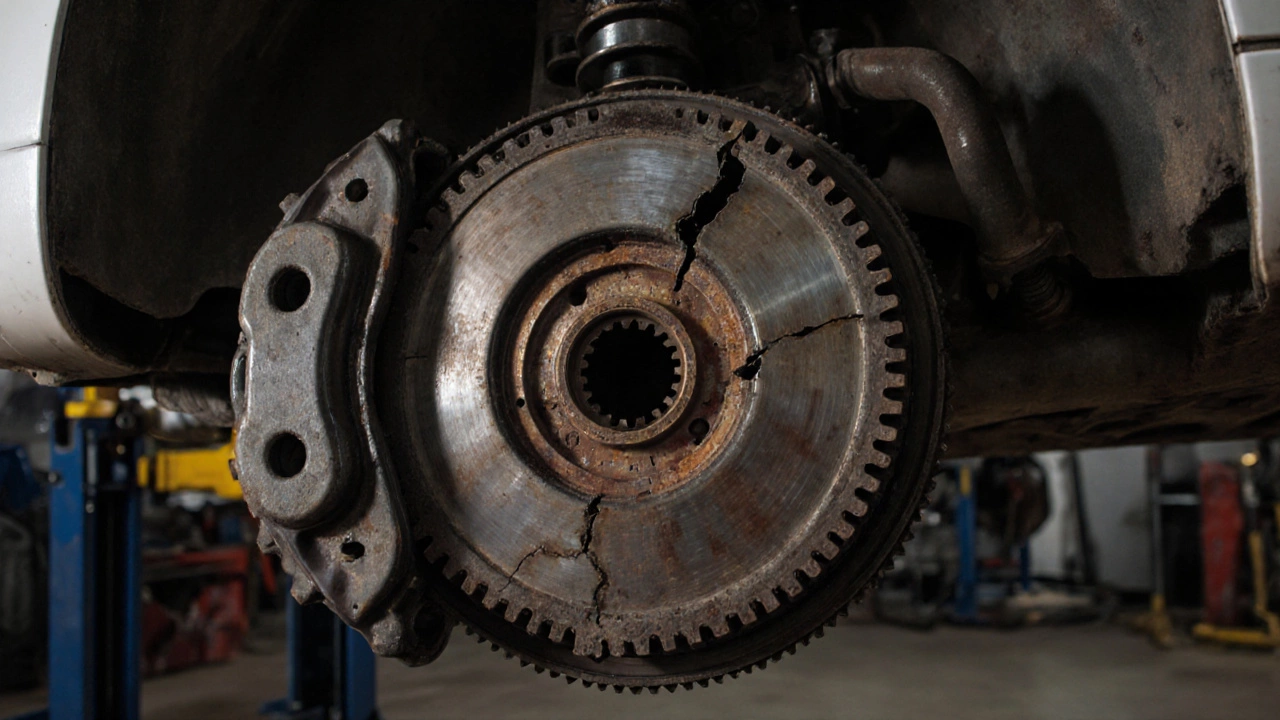
What Noise Does a Bad Flywheel Make? Signs You Need a Replacement
A bad flywheel makes grinding, clunking, or chirping noises-especially when shifting or accelerating. Learn how to spot the signs, why it fails, and when to replace it before it destroys your clutch or transmission.