Car Wheels: What You Need to Know About Size, Type, and Performance
When you think about your car’s performance, you probably focus on the engine or brakes—but the car wheels, the circular components that connect your vehicle to the road, including rims and tires. Also known as wheels and tires, they’re the only part of your car that actually touches the ground. Get them wrong, and even the best engine won’t help you stay safe or efficient. A mismatched wheel size can throw off your speedometer, wear out your suspension faster, or even cause your tires to rub against the fender. It’s not just about looks—it’s physics.
Alloy wheels, lightweight metal wheels made from aluminum or magnesium alloys. Also known as mag wheels, they’re popular for their strength and heat dissipation—they help your brakes stay cool during hard stops. But they’re not the only option. Steel wheels are tougher for rough roads and cheaper to replace. Then there’s wheel offset, the distance between the wheel’s centerline and the mounting surface. Too much or too little offset, and your tires might rub on suspension parts or your steering feels off. If you’ve ever felt your car pulling to one side or heard a weird clunk over bumps, it could be your wheels—or the tires mounted on them.
Not all car wheels are created equal. A 16-inch wheel on a compact car isn’t the same as a 20-inch wheel on a sports sedan. Bigger wheels often look aggressive, but they add weight, hurt fuel economy, and make your ride harsher on potholes. Smaller wheels? They’re smoother, cheaper to replace, and better for winter conditions. The right fit depends on your car’s make, your driving habits, and the roads you’re on. If you’re replacing worn-out wheels, check your owner’s manual or a trusted fitment guide—don’t just pick the shiniest ones at the store.
You’ll find posts here that break down how to tell if your wheels are worn, how to choose the right size without overspending, and what happens when you mix the wrong tires with the wrong rims. Some cover how to spot bent rims from pothole damage. Others explain why some aftermarket wheels fail after a year, while others last a decade. There’s no magic formula—just real-world tests, common mistakes, and what actually works on the road.
Whether you’re fixing a flat, upgrading for looks, or just trying to avoid a costly mistake, the right wheel setup makes a difference. The posts below give you the facts—not the hype—so you know exactly what to look for before you buy, install, or replace your car wheels.

Are alloy rims good? Pros, cons, and what you really need to know
Alloy rims look great and improve handling, but they're more expensive and prone to damage in winter. Learn if they're worth it for your driving conditions and how to protect them.
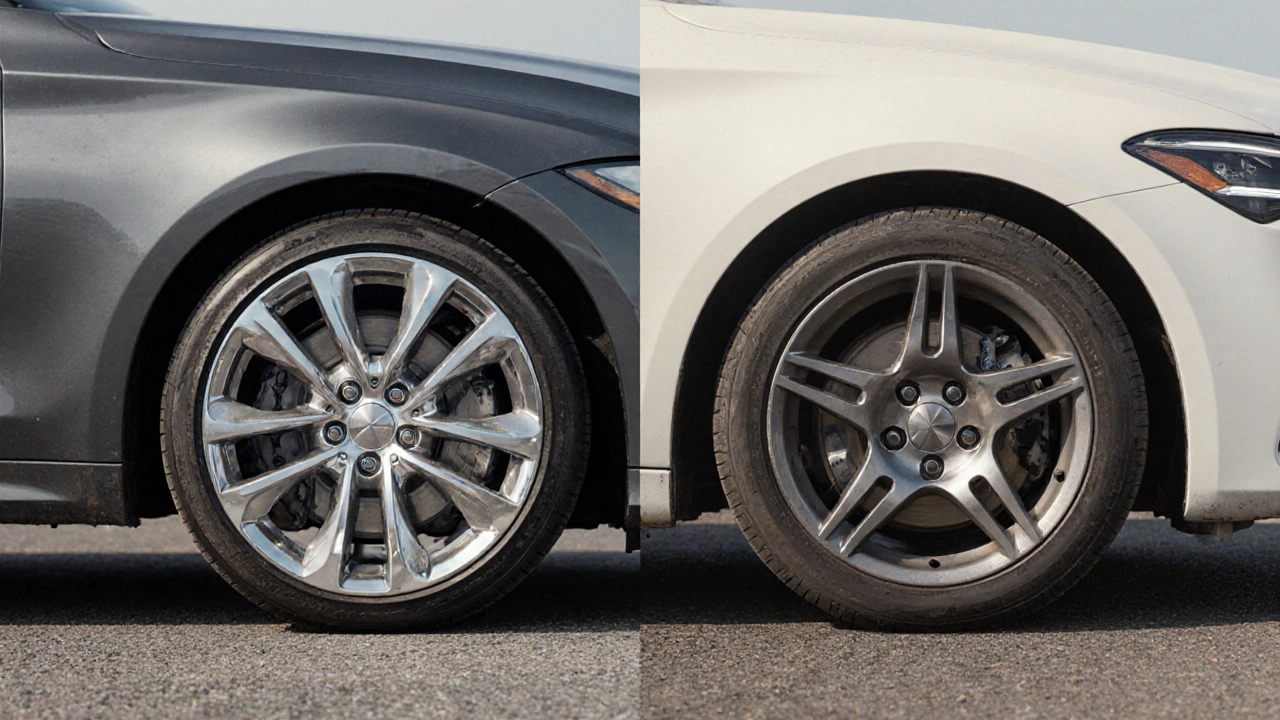
What Is the Difference Between Alloy Rims and Steel Rims?
Alloy rims are lighter and look better, but steel rims are tougher and cheaper. Learn the real differences in weight, performance, cost, and winter durability to choose the right wheels for your car.