Clutch Problems: Signs, Causes, and How to Fix Them
When your clutch, the component that connects your engine to the transmission in manual cars. Also known as friction disc, it starts acting up, your car won’t shift smoothly—or at all. A bad clutch doesn’t always scream for help. Sometimes it just slips when you accelerate, grinds when you shift, or feels spongy under your foot. These aren’t just annoyances—they’re warnings that your clutch is wearing out or failing. And if you ignore them, you could end up stranded with a much more expensive repair.
Clutch problems usually come down to three things: wear, misuse, or fluid issues. Most clutches last between 80,000 and 120,000 miles, but if you ride the clutch pedal, start in high gear, or drive in heavy traffic with your foot resting on the pedal, you could cut that in half. The clutch disc, the friction surface that grips the flywheel wears down over time, just like brake pads. Meanwhile, the release bearing, the part that disengages the clutch when you press the pedal can fail from constant pressure or lack of lubrication. And if your clutch hydraulic system leaks fluid, the pedal will feel soft or go all the way to the floor.
You don’t need a mechanic to spot early clutch trouble. If your engine revs higher than normal but your car doesn’t speed up, that’s clutch slip. If shifting feels rough or you hear grinding when you change gears, the clutch isn’t fully disengaging. A sticky or heavy pedal? That could mean air in the lines or a worn master cylinder. And if your clutch pedal feels higher than usual, you might be looking at a stretched cable or worn components. These aren’t guesses—they’re common symptoms backed by real-world repairs.
Fixing a clutch isn’t always a weekend job, but knowing the signs helps you avoid being caught off guard. Some drivers stretch it too long, thinking they can "just drive a little longer." But a failing clutch can damage the flywheel or transmission, turning a $500 repair into a $2,000 one. The good news? You can spot most problems before they turn into disasters. Below, you’ll find real guides from drivers who’ve been there—how to test your clutch at home, what to look for when it’s failing, and how to make your clutch last longer without spending a fortune.
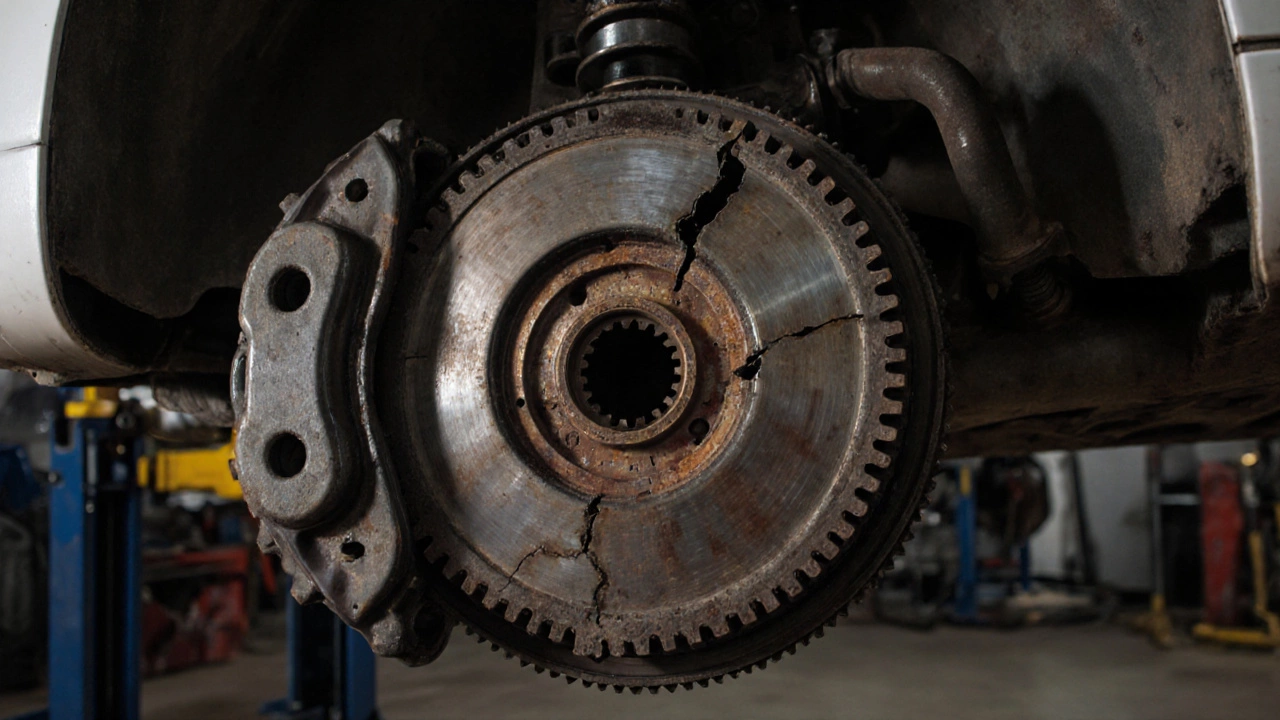
What Noise Does a Bad Flywheel Make? Signs You Need a Replacement
A bad flywheel makes grinding, clunking, or chirping noises-especially when shifting or accelerating. Learn how to spot the signs, why it fails, and when to replace it before it destroys your clutch or transmission.

Slipping Clutch Symptoms — How It Feels & What To Do
Ever wonder what a slipping clutch feels like? Here’s how to spot the signs, why it happens, and what you should do if your clutch starts slipping.