Flywheel Replacement: What You Need to Know Before You Start
When your car starts shuddering at idle, makes grinding noises when you press the clutch, or refuses to start smoothly, the culprit might not be the clutch—it could be the flywheel, a heavy metal disc that connects the engine to the transmission and smooths out power pulses. Also known as a crankshaft flywheel, it’s the unsung hero that keeps your engine running steady and your shifts clean. Most people think only the clutch wears out, but the flywheel takes the same abuse—and if it’s cracked, warped, or worn, replacing just the clutch is a waste of time and money.
A dual mass flywheel, a type of flywheel with built-in damping springs to reduce vibration is common in modern cars, especially diesel models. It’s more complex than a solid flywheel and can fail in ways you won’t notice until it’s too late—like sudden jerking when shifting or a loud clunk when you let off the gas. If your car has one, and you’re replacing the clutch, it’s almost always worth replacing the flywheel too. Solid flywheels last longer but still wear down over time, especially if you ride the clutch or frequently haul heavy loads. A worn flywheel surface can cause the clutch to slip, even with a brand-new clutch kit installed.
Replacing a flywheel isn’t a quick job. It requires pulling the transmission, which means you’re already deep into the drivetrain. That’s why most mechanics bundle it with a clutch replacement—you’re already there, so why not fix both at once? The labor cost is high, but doing it right saves you from having to do it again in six months. You’ll need a torque wrench, clutch alignment tool, and the right bolts—using the wrong ones or not tightening them to spec can lead to catastrophic failure. And don’t forget to inspect the pilot bearing and throw-out bearing while you’re in there; they’re cheap to replace now and expensive to fix later.
Some drivers upgrade to a lightweight flywheel for better throttle response, especially in performance or racing setups. But if you drive daily, stick with OEM specs. A lighter flywheel makes low-speed driving jerky and harder to control, especially in traffic. It’s not a magic upgrade—it’s a trade-off. The right flywheel isn’t about being the lightest or cheapest. It’s about matching your driving style and your car’s design.
There’s no set mileage for flywheel failure—it can last the life of the car, or it can go bad at 60,000 miles if you’ve been harsh on the clutch. The key is paying attention to the symptoms: vibrations, unusual noises, slipping gears, or difficulty shifting. If you’re replacing your clutch and the flywheel looks scored, discolored, or cracked, don’t gamble. Fix it now. The next time your car refuses to start or the clutch feels spongy, you’ll be glad you did.
Below, you’ll find real-world guides on diagnosing clutch and flywheel problems, step-by-step replacement tips, and what to watch for when buying parts. No fluff. Just what works.
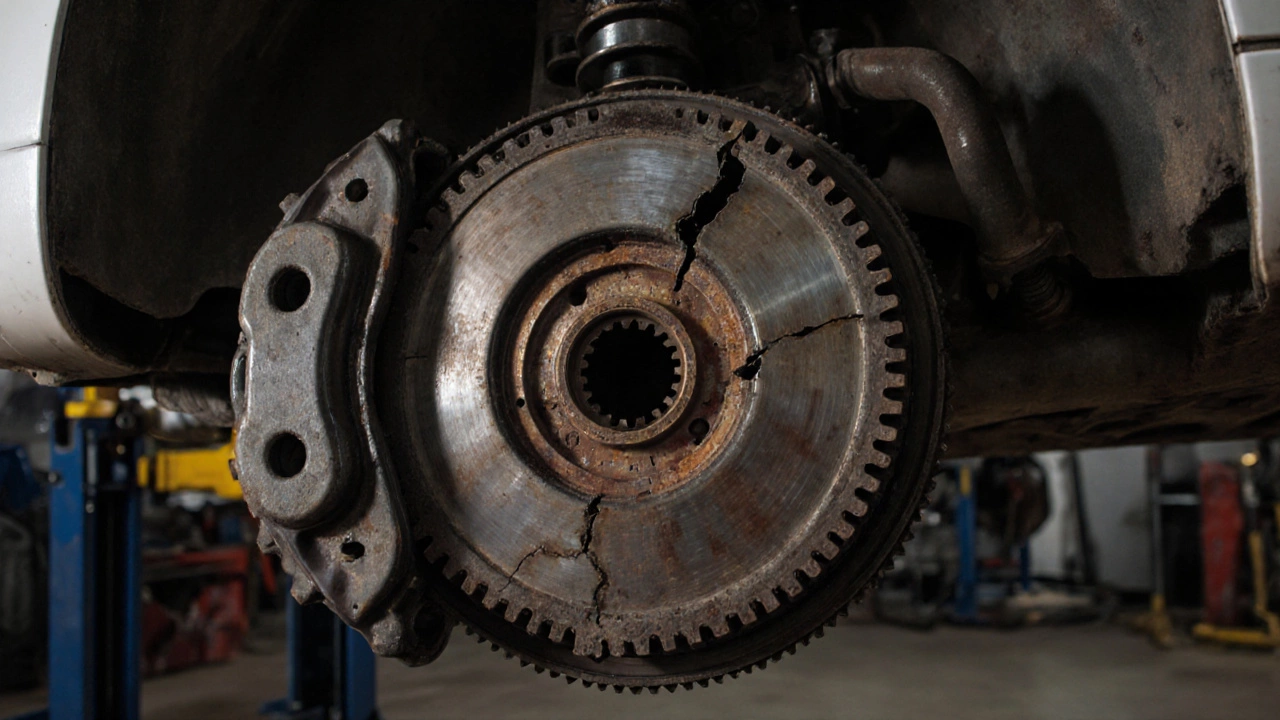
What Noise Does a Bad Flywheel Make? Signs You Need a Replacement
A bad flywheel makes grinding, clunking, or chirping noises-especially when shifting or accelerating. Learn how to spot the signs, why it fails, and when to replace it before it destroys your clutch or transmission.