Radiator Inspection: How to Spot Trouble Before Your Engine Overheats
When your car’s radiator, a key part of your vehicle’s cooling system that circulates coolant to keep the engine from overheating. Also known as a cooling radiator, it’s one of the most overlooked components until your engine starts smoking on the side of the road. Most people don’t think about it until something goes wrong—but a quick radiator inspection every few months can stop a $3,000 engine rebuild before it even starts.
The cooling system, the network of hoses, thermostat, water pump, and radiator that works together to regulate engine temperature doesn’t need fancy tools to check. Just look for coolant leaks, wet spots under the car or sticky residue near the radiator or hoses. A small drip today could mean a cracked core or a blown head gasket tomorrow. If you see rust or sludge inside the radiator when you peek at the cap, that’s not normal—it’s a sign of old, dirty coolant eating away at metal from the inside. And if your engine runs hotter than usual, especially in traffic, that’s your radiator screaming for attention.
Many drivers think a radiator only fails after years of use, but it can go bad fast if you’re using the wrong coolant, skipping flushes, or driving with a faulty thermostat. A bad thermostat, a valve that controls coolant flow to the radiator can trick you into thinking the radiator’s fine when it’s actually not getting enough coolant. And don’t ignore the radiator cap—it’s not just a lid. A weak cap can’t hold pressure, which lowers the coolant’s boiling point and causes overheating even if everything else looks okay.
There’s no magic checklist for radiator inspection, but there are simple steps anyone can do. Check the coolant level when the engine is cold. Look for cracks or bulges in the hoses. Smell for sweet, syrupy odors—that’s antifreeze leaking. Listen for gurgling sounds from under the hood after you turn the car off. And if you’ve had overheating before, even once, you’re already at risk. That’s not a coincidence. It’s a pattern.
What you’ll find below are real, no-fluff guides from people who’ve been there—how to spot the seven clear signs your radiator is failing, whether replacing it is worth the cost, and how to avoid being upsold at the shop. These aren’t theory pieces. They’re fixes, cost breakdowns, and warnings from actual car owners and mechanics who’ve seen what happens when you ignore the radiator until it’s too late. Skip the guesswork. Learn what to look for, what to ignore, and when to act—before your engine turns into a paperweight.
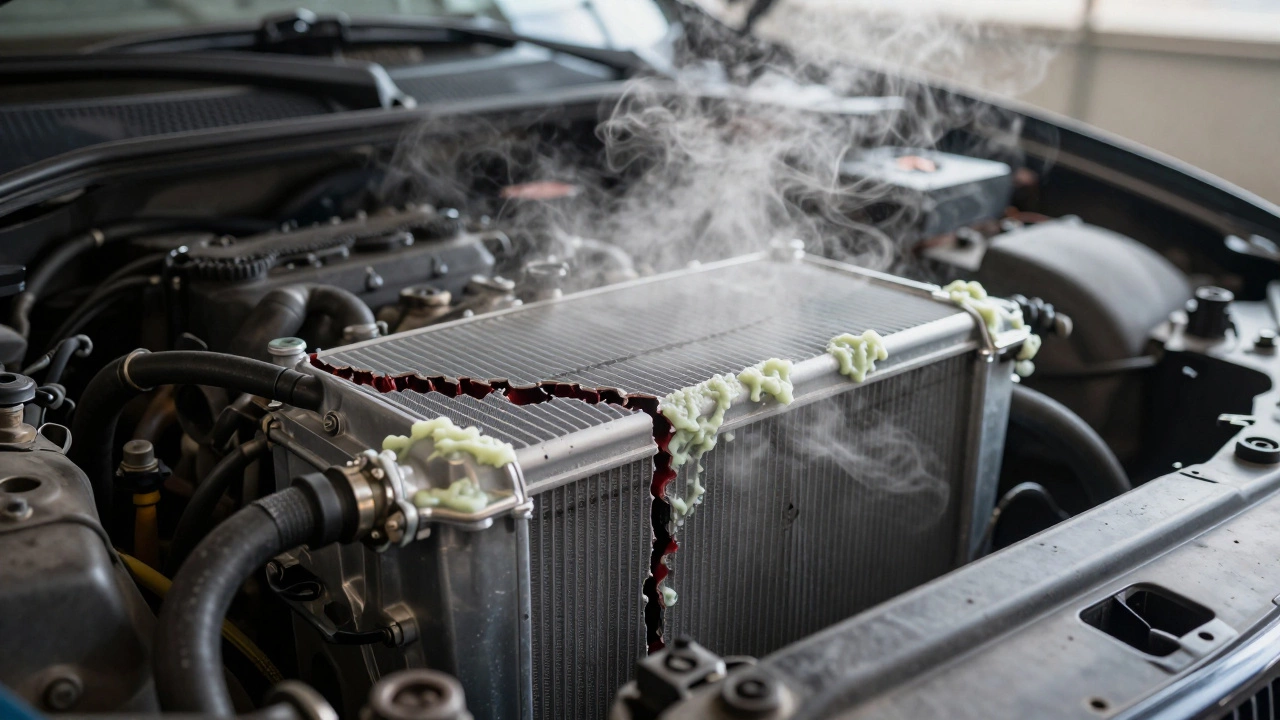
How to Tell If Your Car Radiator Is Failing
Learn the real signs your radiator is failing - overheating, coolant loss, sludge, and more. Avoid engine damage by catching radiator problems early.