 Jul, 31 2026
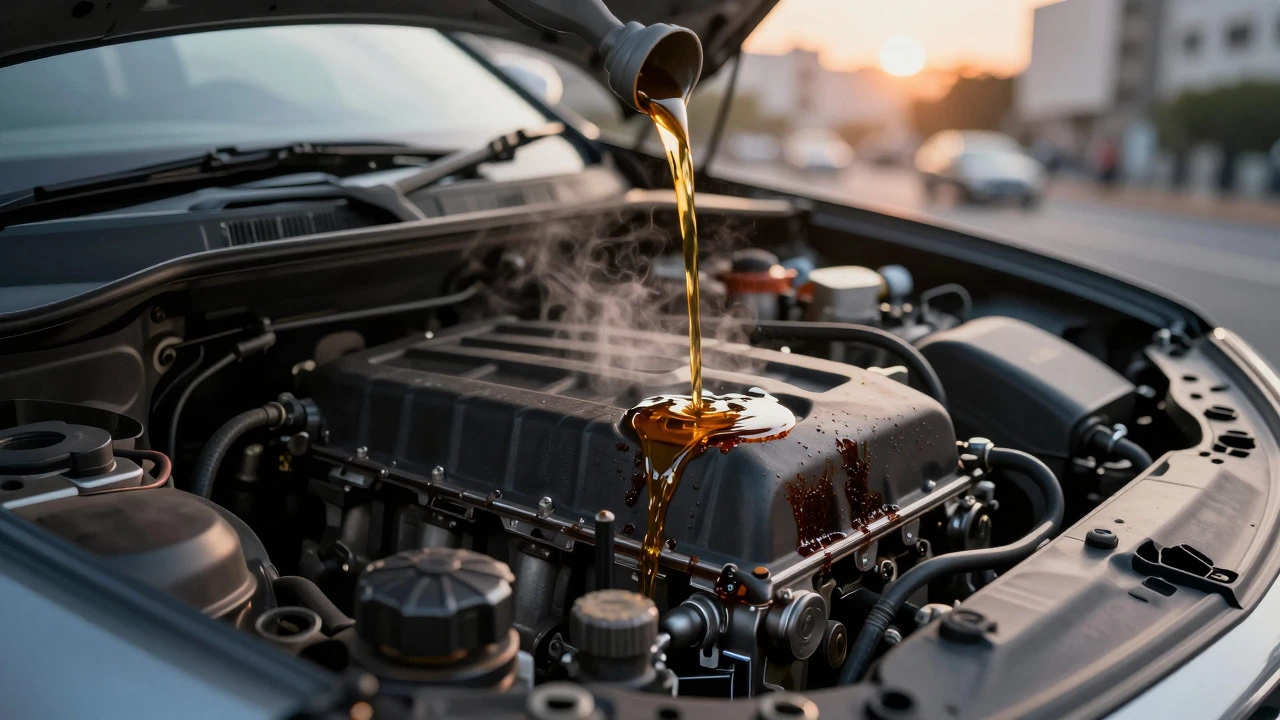
You pull up to the gas station, check your dashboard, and realize you’re 800 miles past that recommended oil change. Panic sets in. Is your engine already ruined? Will it blow a gasket on the drive home? The short answer is: probably not immediately, but you are definitely playing with fire.
We’ve all been there. Life gets busy, schedules clash, and that little wrench icon or mileage reminder slips our mind. But going over the 5,000-mile mark isn’t just a minor oversight; it’s a stress test for your car’s most vital organ. To understand what’s actually happening under the hood, we need to look at how engine oil works and why time and distance matter so much.
The Job of Engine Oil: More Than Just Lubrication
Think of engine oil as the blood of your vehicle. It doesn’t just keep metal parts from grinding against each other. Its job is multifaceted. First, it reduces friction between moving components like pistons, crankshafts, and camshafts. Second, it acts as a coolant, carrying heat away from the combustion chamber. Third, it cleans. Modern oils contain detergents and dispersants that pick up soot, metal shavings, and carbon deposits, suspending them until they can be filtered out.
When you first fill your tank with fresh oil, it’s clear, viscous, and chemically balanced. But as soon as the engine starts running, that balance begins to degrade. Heat breaks down the molecular structure of the oil. Combustion byproducts leak past piston rings into the oil pan (a process called blow-by), contaminating the fluid with acids and water vapor. By mile 3,000, your oil is already doing heavy lifting. By mile 5,000, many manufacturers say it’s done its job. Going beyond that means asking a tired worker to stay late without extra pay.
What Actually Happens After Mile 5,000?
If you push to 6,000 or even 7,000 miles, several things start to go wrong inside the engine block. The changes aren’t always visible from the outside, but they are cumulative.
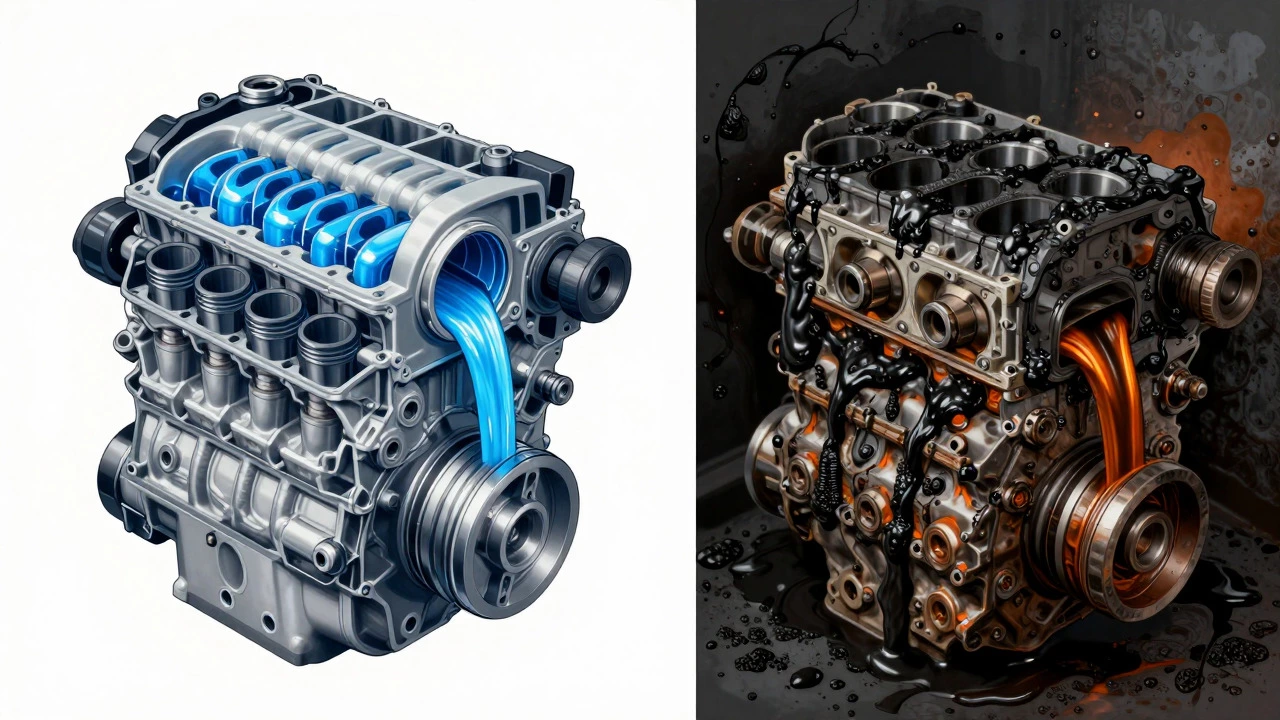
- Viscosity Breakdown: As oil heats up cycle after cycle, it thins out. Thinner oil provides less cushioning between metal surfaces. This leads to increased metal-on-metal contact, which accelerates wear on bearings and cylinder walls.
- Acid Buildup: Water vapor and sulfur from fuel create acidic compounds in the oil. Fresh oil has additives to neutralize these acids. Once those additives are used up, the acid starts eating away at internal seals and copper plating in the engine.
- Sludge Formation: This is the big one. When oil can no longer suspend contaminants, they clump together. These clumps turn into a thick, tar-like substance known as sludge. Sludge clogs oil passages, starving critical components like the variable valve timing (VVT) system of lubrication.
In my experience working on vehicles in Hamilton, where winters are harsh and roads are salted, I see this often. Drivers who stretch their intervals tend to have engines with hardened valve stem seals and sticky lifters. It’s not instant death, but it’s slow degradation.
Synthetic vs. Conventional: Does It Change the Rules?
This is where confusion usually lies. You might hear someone say, "I use full synthetic, so I can go 10,000 miles." And they’re partially right. Synthetic oil, unlike conventional petroleum-based oil, is engineered at a molecular level. It has a more uniform structure, making it more resistant to heat breakdown and oxidation.
| Oil Type | Typical Interval | Heat Resistance | Cost per Quart |
|---|---|---|---|
| Conventional | 3,000 - 5,000 miles | Low | $2.50 - $4.00 |
| Synthetic Blend | 5,000 - 7,500 miles | Medium | $4.00 - $6.00 |
| Full Synthetic | 7,500 - 10,000+ miles | High | $6.00 - $9.00 |
However, "can" doesn’t mean "should" without checking your manual. If your owner’s manual says 5,000 miles, sticking to that is safest for warranty purposes. Even if you use high-end synthetic oil, extending the interval too far voids protection. The oil filter also plays a role here. Most paper filters become saturated around 5,000 miles. If the oil is clean but the filter is clogged, flow restriction causes just as much damage as dirty oil.
The Cost of Waiting: Repairs vs. Maintenance
Let’s talk money. An oil change costs between $40 and $80 depending on where you live and what shop you visit. It takes about 20 minutes. Now compare that to the cost of fixing an engine damaged by neglect.
A simple sludge flush might cost $150-$300, but it’s not always effective if the sludge is severe. Replacing a timing belt or chain tensioner due to lack of lubrication can run $800 to $1,500. A complete engine rebuild? We’re talking $3,000 to $6,000. In extreme cases, replacing the entire engine assembly costs more than the car is worth.
I had a client last winter bring in a 2018 sedan that had gone 12,000 miles between changes. The VVT solenoids were completely gummed shut. The engine was knocking because the main bearings had worn out. He saved maybe $200 in oil changes over two years and lost $4,500 in repairs. Do the math. It’s never worth it.
Signs Your Oil Is Past Its Prime
Your car will usually give you hints before it throws a rod. Pay attention to these signs:
- Noisy Engine: Valvetrain ticking or bearing knock indicates low pressure or thin oil.
- Dark, Smelly Exhaust: If you smell burning oil or see blueish smoke, oil is leaking into the combustion chamber, often due to worn seals exacerbated by old oil.
- Grainy Feel on Dipstick: Pull the dipstick. Wipe it clean. Dip it again. If the oil feels gritty or smells strongly of gasoline, it’s contaminated.
- Check Engine Light: Low oil pressure triggers sensors. Don’t ignore this light.

How to Avoid Missing Your Next Change
Forget relying on memory. Set up a system. Many modern cars have maintenance reminders built into the dashboard. Reset it every time you get an oil change. If your car is older, use a sticker on the windshield or set a phone reminder based on mileage. Apps like Fuelly or even simple calendar alerts work wonders.
Also, consider your driving conditions. The 5,000-mile rule is a general guideline. If you do a lot of stop-and-go city driving, tow heavy loads, or drive in extreme cold or heat, you should change your oil more frequently-perhaps every 3,000 to 4,000 miles. Severe service conditions break down oil faster than highway cruising.
Conclusion: Play It Safe
Going over 5,000 miles between oil changes won’t necessarily kill your engine overnight, but it chips away at its longevity. The risk of sludge, acid corrosion, and accelerated wear grows exponentially with every mile you delay. For a few dollars a month, you can protect a multi-thousand-dollar investment. Keep your oil fresh, your filter new, and your engine happy. It’s the easiest insurance policy you’ll ever buy.
Is it okay to go 1,000 miles over the recommended oil change interval?
Occasionally going 1,000 miles over is unlikely to cause immediate catastrophic failure, especially if you use synthetic oil. However, doing it regularly accelerates wear. Think of it like skipping a workout occasionally versus skipping them every week. One missed session is fine; chronic neglect leads to decline.
Does driving style affect how often I need an oil change?
Yes, significantly. Aggressive acceleration, frequent short trips (where the engine doesn't fully warm up), and towing place extra stress on the engine and oil. These "severe service" conditions can degrade oil twice as fast as gentle highway driving. If you drive hard, stick to the shorter end of the recommended interval.
Can I just add more oil instead of changing it?
No. Adding oil only maintains the volume, not the quality. Old oil loses its detergent properties and becomes acidic. Topping off dirty oil is like adding fresh water to a muddy pond-it doesn’t make the water clean. You need to drain the old, contaminated fluid and replace it with fresh oil and a new filter.
How does climate impact oil life?
Extreme temperatures hurt oil. High heat causes oil to oxidize and thin out faster. Extreme cold can cause moisture condensation in the oil pan, leading to emulsification (milky oil). In places like Canada, where we swing from -30°C to +30°C, using high-quality synthetic oil and adhering strictly to intervals is crucial to handle thermal shock.
What is the biggest myth about oil changes?
The biggest myth is that the "5,000-mile rule" applies to everyone equally. While it’s a safe standard for conventional oil, many modern cars with synthetic oil and advanced filtration systems are designed for 7,500 to 10,000-mile intervals. Always check your specific owner’s manual rather than following generic advice from quick-lube shops who profit from more frequent visits.